Special Features
Philip Shaibu’s Political Journey: From Edo Power Struggles to National Sports Leadership and a New Chapter in Public Service

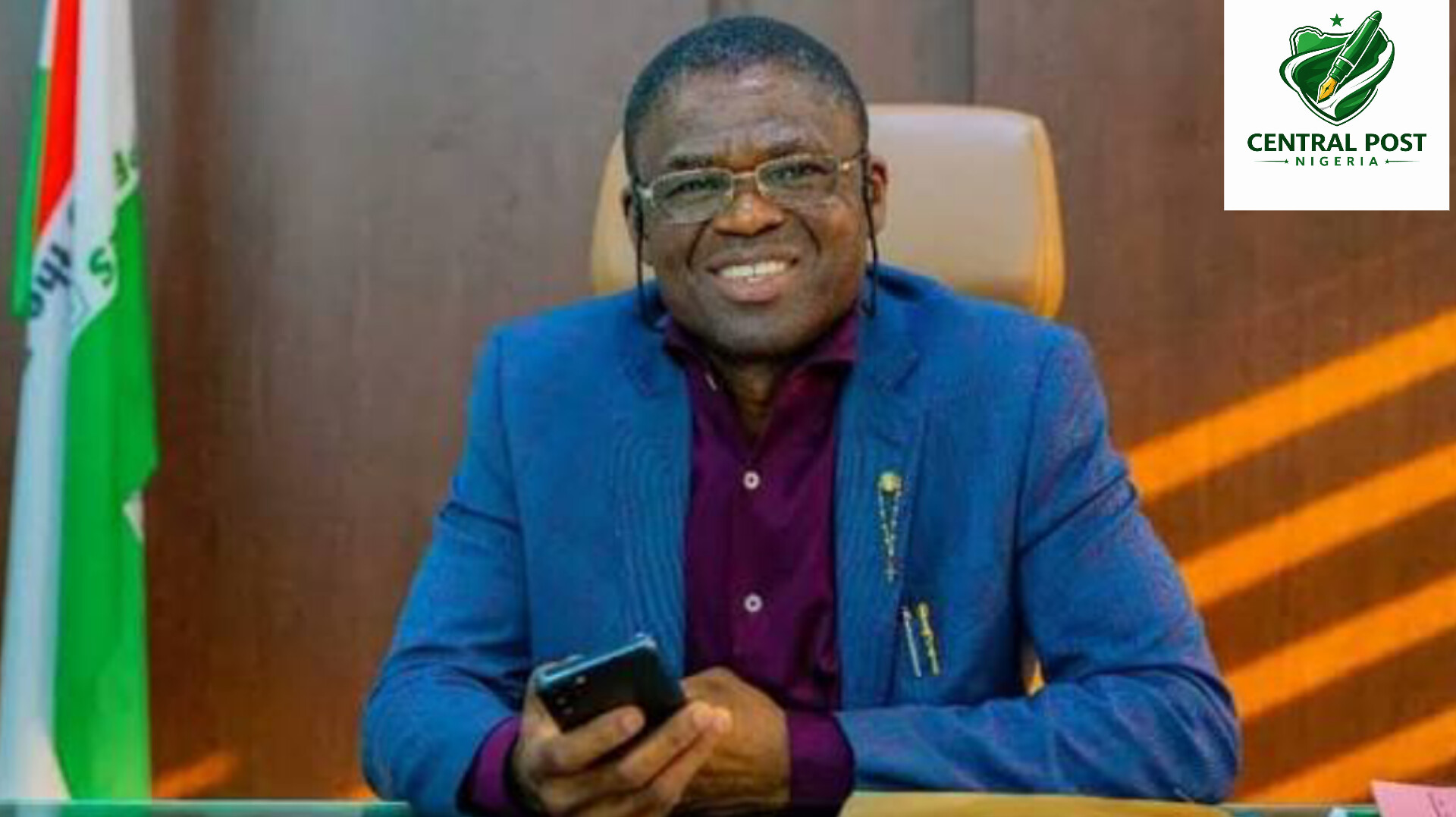
The political career of Philip Shaibu has been one of the most followed in recent Edo State politics in the last decade. His political success in becoming the Deputy Governor of Edo State, the rift that occurred between him and former Governor Godwin Obaseki, his defection from the PDP political party and joining APC, and all other related activities have shown loyalty wars, political survival tactics, and political realignment.
In light of his appointment as Director-General of the National Institute of Sport, the question that begs an answer is: Is he better off politically after his realignment and defecation from Edo State politics?
Early Political Career in Edo State
The political career of Philip Shaibu took off in Edo State on the back of his grassroots support and his close relationship with the incumbent Governor Godwin Obaseki, especially during their first term in office. Shaibu, in his capacity as the deputy governor, was seen as being one of the most politically vibrant individuals, engaging in important political activities and ensuring that the party functioned effectively.
While there seemed to be a very good working relationship between the duo during the early part of their stay in office, it was evident from behind the scenes that they were developing political differences.
Fallout with Obaseki
The political affiliation between Shaibu and Governor Obaseki soon turned sour, resulting in what became arguably one of the most highly publicized political disputes in the history of Edo State.
The feud revolved around matters of loyalty, political influence, and exclusion from critical political decision-making. While Shaibu claimed that the government had ignored him, the other side argued that internal differences had been affecting the political process.
In the end, Shaibu found himself politically marginalized, unable to reconcile his differences with the ruling party in Edo State.
This period marked a watershed moment in Shaibu’s political career, which would lead him to part ways with the PDP.
Defection from PDP and Joining APC
Shaibu abandoned the PDP in the aftermath of his disagreement with Obaseki and joined the APC. The defection was seen as an act of self-preservation and a strategic realignment in preparation for the future.
It should be noted that at the time, the political analysts were torn on whether his defection was risky. Some felt that since the structure of PDP was powerful in the politics of Edo State, his defection could be a bad idea. However, others thought that the defection would open doors for Shaibu nationally in the future.
Whether he was taking the right or wrong step, the defection marked a turning point in his political career.
Transition to National Sports Administration
Shaibu was later promoted to the position of Director-General of NIS, which marks his entry into national sports administration from political involvement at the state level.
As he takes up his new position, Shaibu is now attempting to change his image from that of a politician always ready to take on any political opponent to that of an institutional builder who will focus more on building capacity in Nigeria’s sports sector.
The actions he has taken recently show this trend.
An Innovative Strategy to Promote Sports Development in Nigeria
One of Shaibu’s most innovative recent ventures was his launching of a two-year strategy that seeks to address the deficiency in trained sports coaches in Nigeria.
While on a visit to the Nigeria Football Federation head office located in Abuja, Shaibu pointed out the major problem facing the sports system of the nation:
According to his observation, there is a deficiency of about two million coaches in the country.
This problem, he noted, presents a great challenge towards ensuring development within the sport industry in the country.
It is important for the institute to work in partnership with relevant stakeholders in the world of football in Nigeria, especially the Nigeria Football Federation (NFF).
Collaboration with the Nigeria Football Federation
A key milestone in the process of fostering partnerships within institutions for sports was made when the Nigeria Football Federation was visited.
The NFF president Ibrahim Gusau showed his openness towards collaborating with the institute, stating that he was ready to cooperate in order to help the institute realize its goals.
Gusau further stated that the federation had already been focused on coaching, offering various training sessions for coaches that have been accredited by CAF.
He explained that widening collaboration with the National Institute for Sports would greatly benefit Nigeria in improving its coaching system.
The NFF also encouraged reaching out to other educational institutions in Nigeria.
Within Shaibu’s Coaching Deficit Strategy
The strategy revolves around the creation of structured training programmes, which are meant to boost the production of quality coaches within different sporting fields.
Shaibu noted that during the latest recruitments within the institute, there was a huge dominance of football training, with more than half of the recruits having football coach training.
As he notes, this is indicative of the fact that Nigeria is a “football dominant country.” However, it further shows the disparity within the growth of coaching in other sporting fields.
Benefits in Politics For Philip Shaibu
Whether the political positions held by Philip Shaibu have been beneficial for him poses a number of questions.
For one, the falling out he had with Obaseki means that his tenure in the politics of Edo State has come to an end rather abruptly and negatively. Leaving the PDP has also meant leaving behind an important political network at the state level.
Nonetheless, being named Director-General of the National Institute for Sports provides him with a high-level national post, where he can exert influence in a totally new arena.
Although he is not in the political scene anymore, his new post gives him the opportunity to influence policy matters on the national level.
In short, his career path has changed from politics to administration.
Creating a New Identity in Public Service
In contrast to the previous analysis, Shaibu’s current position reveals that he has reinvented himself and taken steps away from partisan politics and towards public service.
His current job involves him working in the sports sector where he develops sports in the country, trains coaches, and works in partnership with various sporting organizations.
Conclusion: Reinvention vs. Retrenchment
The biography of Philip Shaibu shows that the reality of Nigeria’s political arena requires that individuals reinvent themselves based on their interests and the changes that take place.
He started out as a deputy governor and later went through political exile in the camp of the party he was associated with before becoming a national sports administrator.
Although it remains debatable whether Shaibu’s new career path will be beneficial to him politically, it is clear that he has left Edo State politics to engage in national-level sports development and institutional reforms.
While his political future may seem uncertain, his work as a sports administrator has had some positive results since he became the head of the National Institute for Sports.

Atiku to Obasanjo: You’re bitter because I stopped your third-term agenda
Enugu: Army rescues abducted senior officer, civilian

Two Police officers die after alleged collision with military officer’s vehicle in Kaduna

Charles Okocha wins boxing rematch after Portable’s walkout
Picking Atiku as my Vice President remains my biggest regret — Obasanjo

Police bust fake govt number plate syndicate, recover stolen assets in FCT

INEC set to publish personal information of Presidential, National Assembly candidates

Gunmen invade Gateway Polytechnic in Ogun, abduct 5 students

FG unveils plan to end power subsidies from 2027

APC behind Abia billboard levy, Kenneth Okonkwo claims

Eddie Howe resigns as Newcastle boss

2027 polls: 685 APC LG chairmen declare support for Tinubu, promise mobilisation

DSS slams fresh terrorism charges on 5 convicted Ansaru members over Ogbomoso school attack

JAMB to inaugurate Segun Aina as new Registrar on Friday
Gunmen invade Gateway Polytechnic in Ogun, abduct 5 students

Ex-Nigerian envoy to the UK Abubakar Alhaji passes away in Abuja

Osun SSG Igbalaiye released from detention
APC behind Abia billboard levy, Kenneth Okonkwo claims
Party first or resign: APC sends strong message to Tinubu’s appointees
