
Special Features
10 Important facts to know about Prof. Oluwatoyin Ogundipe, Tinubu’s newly appointed NUC Chairman

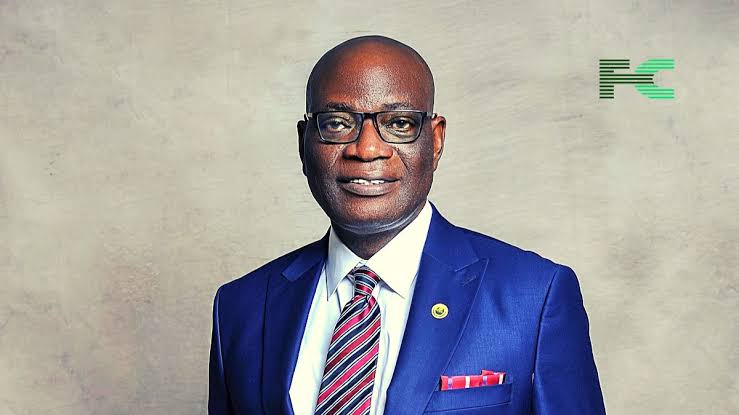
President Bola Ahmed Tinubu has appointed renowned academic and former Vice-Chancellor of the University of Lagos (UNILAG), Professor Oluwatoyin Temitayo Ogundipe, as the new Chairman of the Governing Board of the National Universities Commission (NUC).
The appointment marks another significant chapter in the career of one of Nigeria’s most respected scholars and university administrators. As Chairman of the governing board of the agency responsible for regulating and coordinating university education in Nigeria, Ogundipe is expected to play a critical role in shaping the future of the country’s higher education sector.
His appointment comes at a time when Nigerian universities are grappling with challenges relating to funding, infrastructure, global competitiveness, research output, academic stability, and quality assurance.
Here are 10 important facts Nigerians should know about the new NUC Governing Board Chairman.
1. He Is a Former Vice-Chancellor of the University of Lagos
Perhaps the most widely known aspect of Professor Ogundipe’s career is his tenure as Vice-Chancellor of the University of Lagos (UNILAG), one of Nigeria’s most prestigious universities.
He served as the institution’s 12th substantive Vice-Chancellor from 2017 to 2022, overseeing the affairs of the university during a period marked by expansion in research activities, infrastructural development, and academic reforms.
During his administration, UNILAG strengthened its reputation as one of the leading institutions in Africa and consistently ranked among Nigeria’s top universities.
His experience managing a large and complex institution like UNILAG is expected to be invaluable in his new role at the NUC.
2. He Is a Distinguished Professor of Botany
Unlike many university administrators who come from social science or management backgrounds, Professor Ogundipe built his academic reputation in the field of Botany.
He is a renowned scholar whose areas of specialization include:
- Molecular Plant Taxonomy
- Biosystematics
- Ethnobotany
- Cytogenetics
- Ecological Conservation
- Forensic Botany
His extensive contributions to plant science have earned him recognition both within Nigeria and internationally.
Over the years, he has supervised numerous postgraduate students and contributed significantly to scientific research and knowledge development.
3. He Holds Both a PhD and an MBA
Professor Ogundipe combines scientific expertise with management knowledge.
He earned his Doctor of Philosophy (PhD) in Botany from Obafemi Awolowo University (OAU), Ile-Ife, one of Nigeria’s leading institutions for scientific research.
In addition, he obtained a Master of Business Administration (MBA) degree from the University of Lagos.
This rare combination of scientific and managerial training has helped shape his leadership style and administrative effectiveness throughout his career.
It also positions him well to oversee a complex regulatory institution like the NUC.
4. He Has More Than Four Decades of Academic Experience
Professor Ogundipe is not new to the Nigerian education system.
For more than 40 years, he has been actively involved in teaching, research, mentorship, university administration, and policy development.
His experience spans multiple aspects of higher education, giving him a deep understanding of the opportunities and challenges facing Nigerian universities.
This wealth of experience is one of the reasons many education stakeholders view his appointment as a strategic move.
5. He Is Currently the Pro-Chancellor of Redeemer’s University
Before his latest appointment by President Tinubu, Professor Ogundipe was serving as the Pro-Chancellor and Chairman of the Governing Council of Redeemer’s University, Ede, Osun State.
As Pro-Chancellor, he has been involved in policy direction, institutional governance, and strategic planning.
His experience in both public and private university administration provides him with a broad perspective on the higher education landscape in Nigeria.
This exposure is expected to help him formulate balanced policies that benefit universities across different ownership structures.
6. He Is a Fellow of Prestigious International Scientific Bodies
Professor Ogundipe’s influence extends far beyond Nigeria.
He is a Fellow of several respected professional and scientific organizations, including:
- Nigerian Academy of Science
- Linnaean Society of London
- Royal Society of Biology
- Botanical Society of Nigeria
Membership and fellowship in these organizations are reserved for individuals who have made significant contributions to scientific advancement and academic excellence.
His international connections could also help strengthen partnerships between Nigerian universities and global institutions.
7. He Has Held Several Strategic Leadership Positions
Throughout his career, Professor Ogundipe has occupied numerous leadership positions within and outside academia.
Some of these positions include:
- President, Botanical Society of Nigeria
- Chairman, Lagos State Science, Research and Innovation Council
- Deputy Vice-Chancellor at UNILAG
- Dean and Head of Department at various stages of his academic career
These leadership experiences have exposed him to governance, policy formulation, strategic planning, and institutional development.
Such skills are crucial for managing an organization as important as the National Universities Commission.
8. He Will Help Drive University Reforms
The National Universities Commission is responsible for regulating university education in Nigeria.
As Chairman of the Governing Board, Professor Ogundipe will be expected to contribute to major reforms aimed at improving the quality of education.
Key areas likely to receive attention include:
- Accreditation standards
- Research development
- Digital learning initiatives
- Funding mechanisms
- University rankings
- International collaborations
- Graduate employability
His background suggests he understands the urgent need to modernize Nigeria’s higher education system and align it with global best practices.
9. He Is Expected to Promote Academic Stability
Nigeria’s university system has experienced repeated disruptions over the years due to industrial disputes, funding challenges, and governance issues.
One of the expectations surrounding Ogundipe’s appointment is that he will help promote stability across universities.
Given his experience as a university administrator, many believe he possesses the negotiation skills and institutional knowledge necessary to facilitate constructive engagement among stakeholders.
A stable academic environment remains critical to improving educational outcomes and restoring confidence in the university system.
10. His Appointment Aligns With Tinubu’s Education Agenda
According to the Presidency, Professor Ogundipe’s appointment is part of broader efforts to improve quality, access, accountability, and integrity in Nigeria’s education sector.
President Tinubu has expressed confidence that the former UNILAG Vice-Chancellor will provide visionary leadership capable of strengthening the credibility and competitiveness of Nigerian universities.
The appointment also aligns with the administration’s Renewed Hope Agenda, which seeks to reposition critical sectors of the economy, including education.
As Chairman of the NUC Governing Board, Ogundipe will be expected to support policies that encourage innovation, research excellence, institutional transparency, and global competitiveness.
A New Chapter for Nigerian Higher Education
Professor Oluwatoyin Ogundipe’s appointment comes at a crucial moment for Nigeria’s university system.
With increasing demand for quality education, growing competition from international institutions, and rapid technological changes transforming the learning environment, the role of the National Universities Commission has become more important than ever.
His vast experience in university administration, scientific research, policy development, and institutional governance makes him one of the most qualified individuals to oversee the commission’s governing board.
As he assumes his new responsibilities, stakeholders across the education sector will be watching closely to see how his leadership contributes to improving academic standards, strengthening university governance, boosting research productivity, and enhancing the global reputation of Nigerian universities.
For many observers, Professor Ogundipe’s appointment represents not just a change in leadership but an opportunity to advance meaningful reforms capable of transforming higher education in Nigeria for generations to come.

World Cup: Egypt eliminate Australia 4-2 on penalties, reach Last 16

INEC extends continuous voter registration deadline, launches online self-registration

Bandits launch deadly raid, kill traditional leader, son in Sokoto

Victims flee captivity after kidnappers fall asleep in Edo

Federal Government announces ₦39.63bn pension arrears payment

Court orders final forfeiture of ₦150m linked to Delta Lawmaker

Family finds missing son in Rivers prison after 18 years, says his name was changed

Napoli appoint Massimiliano Allegri as new manager following Conte’s exit

Gunmen ambush ex-Benue SSG Prof. David Salifu, dies from sustained injuries

World Cup: Ronaldo, Ramos seal Portugal’s Last-16 qualification against Croatia

Gbajabiamila cleared as Presidency rejects ₦400m bribery allegation, labels it scam

Jigawa sets ₦7.5m initial Hajj fare deposit for 2027 pilgrims

FRSC Recruitment 2026 Opens: How SSCE holders, graduates, artisans can apply

2026 FIFA World Cup: Five African Nations eliminated so far as continental dream faces fresh setback

Coup: 5 face trial over alleged plot to hide ex-gov Sylva

‘Explain the ₦1.3bn budget for fake agency to Nigerians’ — Atiku slams Tinubu

Unknown gunmen kidnap Pastor, two church members in Benue

Naira appreciates further, trades at ₦1,385 per dollar in parallel market

Major Police shake-up as PSC elevates 93 officers
