
News
Only 108 of 39,000 underage UTME candidates meet FG’s criteria

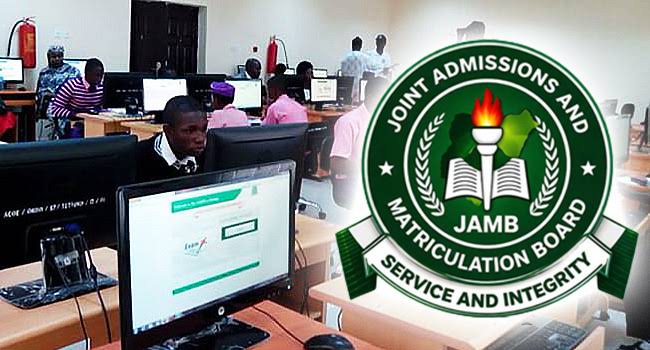
Only 108 candidates out of about 39,000 underage candidates that took part in the 2026 UTME had been able to meet up with the high standards set by the Federal Government for possible admission into tertiary institutions.
This was revealed by the Minister of Education, Dr Tunji Alausa during an audience with the two highest scoring candidates and six other outstanding underage candidates in the 2026 UTME.
The candidates were presented to the minister by the Registrar of the Joint Admissions and Matriculation Board (JAMB), Prof. Segun Aina.
Alausa said the screening process was designed to ensure that exceptionally gifted children seeking admission before the minimum age of 16 demonstrated not only outstanding academic performance but also the psychological, emotional and intellectual maturity required for university education.
According to the minister, 2,244,149 candidates registered for the 2026 UTME, while 2,174,396 sat the examination. About 39,000 of those who took the examination were below the prescribed minimum age for admission, 16.
He explained that underage candidates seeking admission had to meet several rigorous conditions.
These included scoring at least 320 out of 400 in the UTME (80 per cent) and obtaining at least 80 per cent in their post-UTME examinations.
They were also required to attain the stipulated 80 per cent threshold in the assessment of their O-level results and pass a screening exercise to determine their psychological, emotional and intellectual readiness for higher education.
Alausa disclosed that only 391 underage candidates scored at least 320 in the UTME, while further assessments reduced the number eligible for possible admission to 108.
He described the successful candidates as exceptionally gifted, noting that they represented approximately 0.005 per cent of the candidates who sat the examination.
“You are the geniuses in our society,” the minister told the students, stressing that the government had a responsibility to identify exceptional talents and nurture them into innovators capable of developing solutions to Nigeria’s challenges and those of the wider world.
The minister clarified that the minimum admission age of 16 was not intended to frustrate academically gifted children or deny them opportunities to advance their education.
Rather, he said the policy was designed to ensure that candidates admitted at a younger age possessed the maturity needed to cope with university life.
He noted that feedback from the screening exercise had been encouraging, particularly regarding the candidates’ confidence, intellectual abilities and responses to questions designed to assess their preparedness for higher education.
According to him, exceptional academic performance alone cannot justify early admission, as university education also requires emotional stability and the ability to navigate social and intellectual challenges.
Alausa urged the successful candidates to regard their academic abilities as a responsibility to society rather than merely an opportunity for early admission and personal advancement.
“You are the ones who will change Nigeria and change the world with your innovations,” he said.
The minister linked the recognition of exceptional young talents to Nigeria’s broader development prospects, describing the country’s youthful population as a significant resource that must be properly educated and harnessed.
He put Nigeria’s population at an estimated 220 million, with an average age of 18.5 years, adding that about 70 per cent of the population was below 30.
Alausa said the Federal Government’s education reforms were aimed at expanding opportunities for young Nigerians and strengthening the country’s capacity to transform their potential into innovations and solutions that could improve lives.
He congratulated the candidates on behalf of President Bola Tinubu and the Federal Ministry of Education, expressing confidence that their abilities could yield breakthroughs benefiting millions of people.
The eight recognised candidates, including the two highest scorers in the 2026 UTME, received plaques and certificates from the minister.
Owoeye Daniella Jesudunsin emerged as the highest-scoring candidate with 372 marks, while Enwere Kingsley Ikenna followed with 370.

NDLEA arrests 2 Nigerians heading to Europe with 200 wraps of cocaine

INEC removes Gwarzo from Kano final list, recognises Pantami for Gombe PDP ticket

2027 polls will hold as scheduled, no room for postponement – Amupitan

Ekiti Police arrest 11 in connection with attack on Sowore

ONSA, DSS secure release of abducted Imams in Zamfara

I’ll go into the bush to rescue kidnap victims if elected, says Peter Obi

Businessman found lifeless inside office in Ondo

Passengers perish in flames after bus crashes into truck in Kwara

Don’t pay N7,500 for drug screening, paramilitary applicants told

NABTEB announces certificate release, fixes N1,000 processing fee
INEC accepts Pantami, Gwarzo’s candidacies, rejects Adebutu

Five students killed in auto crash while travelling from Gombe to Lagos for IT

Tinubu forwards 6 NMDPRA Executive Director nominees to senate for confirmation

El-Rufai seeks fair trial after 256 days in detention, appeals to Trump, Macron

Police Service Commission promotes 3,800 officers, 2 AIGs, 10 commissioners
Don’t pay N7,500 for drug screening, paramilitary applicants told
I’ll go into the bush to rescue kidnap victims if elected, says Peter Obi
NABTEB announces certificate release, fixes N1,000 processing fee
ONSA, DSS secure release of abducted Imams in Zamfara