
News
Nigeria pushes for 2 permanent UN security council seats for Africa

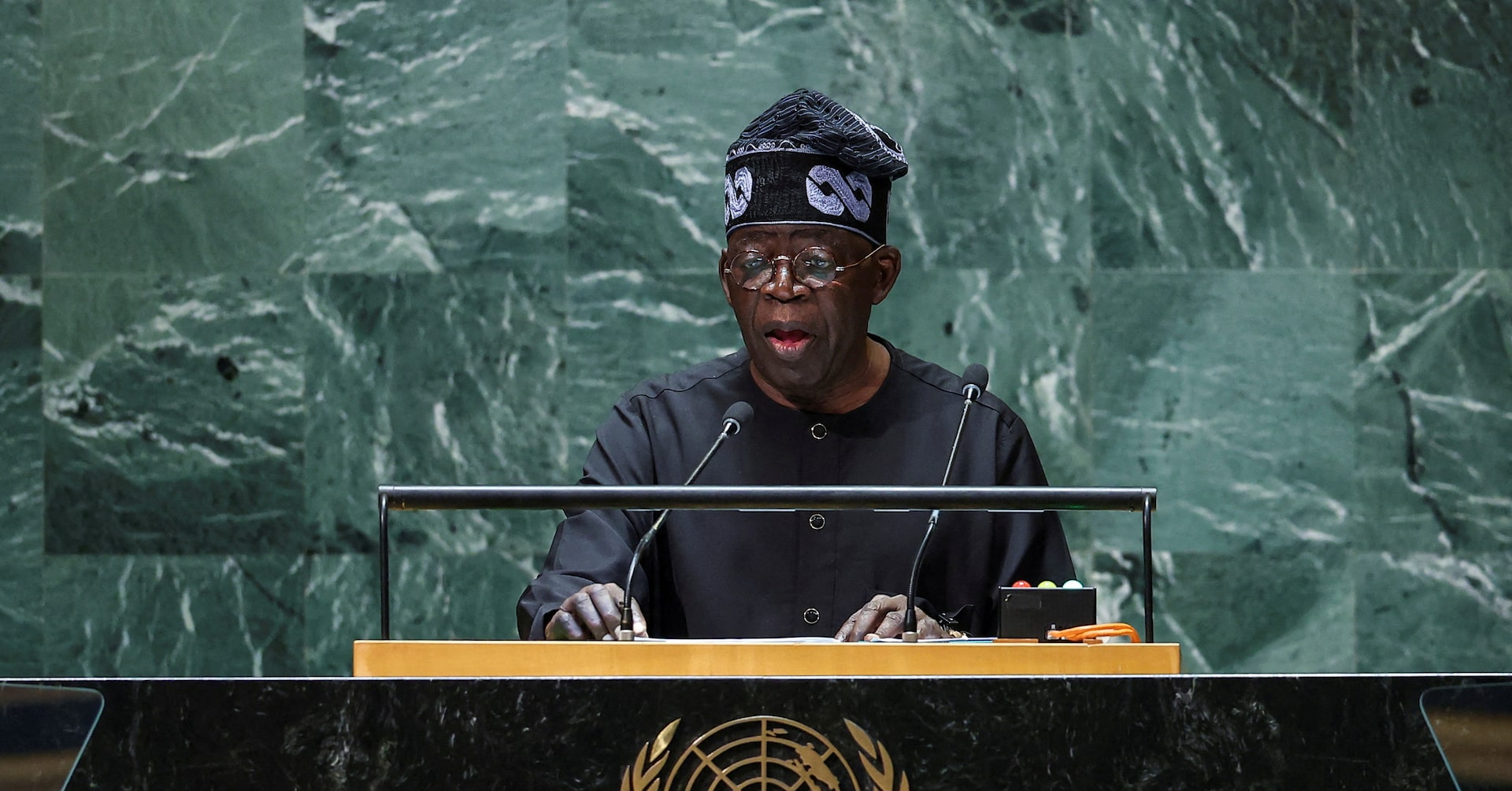
The Nigerian government has requested that Africa gets at least two permanent seats on the UN Security Council with vetoes preserved as long as this privilege continues to exist.
This appeal was made by Vice President Kashim Shettima as he presented the national address of President Bola Tinubu to the 81st UN General Assembly in New York.
Shettima also called for Africa to receive five non-permanent seats on the Council, reflecting the continent’s long-standing position on reforms to the UN’s highest security body.
The Vice-President argued that the current structure of the Security Council no longer represents the realities of the modern geopolitical landscape.
According to him, the existing arrangement has also raised concerns about the legitimacy and effectiveness of global decision-making.
Nigeria’s position is part of broader calls by African countries for greater representation in the UN Security Council and a larger role in decisions affecting international peace and security.
“The world of 2026 cannot remain captive to the distribution of power in 1945,” he said.
He said Africa could no longer remain outside permanent membership while issues concerning the continent continued to occupy substantial attention of the Council.
According to him, Nigeria’s position is consistent with the Ezulwini Consensus and Sirte Declaration, adopted as the Common African Position.
Under the position, Africa seeks at least two permanent seats with all existing privileges, alongside five non-permanent seats on the Council.
The African Union reaffirmed the demand in May, saying Africa’s exclusion from permanent representation constituted a historical imbalance requiring correction.
Shettima argued that institutions claiming authority to act for humanity must adequately reflect the people on whose behalf decisions are taken.
He linked Security Council reform to efforts to restore confidence in multilateralism amid widening geopolitical divisions.
The Vice-President also reaffirmed Nigeria’s commitment to the UN Charter and international cooperation.
He said Nigeria supported an international system where diplomacy takes precedence over coercion and international law guides relations among states.
Shettima recalled Nigeria’s contributions to international and regional peace operations in Liberia, Sierra Leone, Darfur, Mali and The Gambia.
He said Nigeria also continues to work through ECOWAS, the African Union and Gulf of Guinea mechanisms.
According to him, these efforts cover mediation, counter-terrorism, democratic governance and maritime security.
Shettima said persistent conflicts across different regions underscored the need to return to dialogue, collective responsibility and peaceful settlement of disputes.
He identified the conflict in Sudan and other theatres as requiring urgent diplomacy because of their humanitarian, economic and geopolitical consequences.
The Vice-President also warned against a global environment where propaganda blurred distinctions between victims and aggressors and complicated accountability.
He maintained that an inclusive and effective UN remained indispensable to global peace and sustainable development.
Nigeria’s demand comes amid renewed calls by African leaders for reforms to an institution whose permanent membership remains unchanged since its creation.
The Security Council has five permanent members: China, France, Russia, the UK and the US, each possessing veto power.
Africa currently has no permanent representative on the Council.
The African Union’s preferred reform model provides for at least two permanent African seats, including veto privileges while existing members retain them.
The reform model also seeks five non-permanent seats for Africa.
Shettima said Nigeria remained committed to a multilateral order capable of responding more credibly to 21st-century realities.
According to him, differences among nations must not obscure their common humanity or responsibility to preserve peace for future generations. (NAN)

Delta workers shut secretariat, demand action over deputy director’s death

2027: Don’t vote for Atiku, he’s too corrupt to be President – APC tells Nigerians

Tinubu launches $7bn Ogun deep seaport, Blue Marine Economic Zone Project

Protest erupts in Plateau after gunmen kill 3 vigilantes

Nigeria pushes for 2 permanent UN security council seats for Africa

Okpebholo: Petrol costs over ₦3,000/Litre in UK, Nigerians are enjoying

Military Welfare: FG introduces online discount platform for troops, veterans

Atiku unveils ADC campaign council, Names Akobundu DG, El-Rufai Deputy Chairman

Umahi: Obi is not better than me ahead of 2027

NECO announces release of 2026 SSCE internal results
Atiku unveils ADC campaign council, Names Akobundu DG, El-Rufai Deputy Chairman

ECOWAS opens recruitment for qualified nationals across multiple sectors, see how to apply

Plateau: Gunmen kill 3 vigilantes, 4 miners die in pit collapse
FG plans 4,000 influencers to showcase Tinubu administration’s projects — Umahi

JAMB Portal: Steps to change phone number, email address

FIFA names Nigerian referee among officials for U-17 World Cup

Ex-SGF Babachir Lawal joins NDC, backs Obi and Kwankwaso

Court voids Pantami’s PDP candidacy, orders new primary in Gombe

Court of Appeal rejects SDP request to relocate Ekiti governorship tribunal