
News
House of Reps considers bill to create Renewable Energy Authority


The National Assembly has read for the second time a bill which proposes the establishment of National Authority for Renewable Energy with the aim of overseeing and promoting renewable energy in the country.
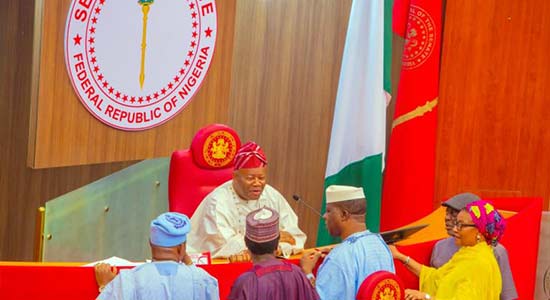
The Electricity Act (Amendment) Bill, 2025, proposed by member representing Ogbaru Federal Constituency in Anambra State, Afam Ogene, was approved for second reading yesterday after debate in the House.
Ogene, who chairs the House Committee on Renewable Energy, said the proposed legislation would address institutional gaps in the power sector by transferring renewable energy functions currently handled by the Nigerian Electricity Regulatory Commission, the Rural Electrification Agency and the Rural Electrification Fund to the proposed authority.
He argued that consolidating these responsibilities under a dedicated institution would improve coordination, reduce duplication of functions and provide a clearer direction for renewable energy development.
“This specialisation will improve coordination, reduce institutional overlaps and provide focused direction for the effective development of the renewable energy sector,” Ogene said.
Under the proposed law, NARE would be responsible for promoting renewable energy projects, particularly mini-grid and off-grid electricity systems serving rural, unserved and underserved communities, as well as island settlements.
The authority would also be empowered to support local manufacturing, research and technical capacity development through financial, fiscal and regulatory incentives designed to attract investment and create jobs in the sector.
The bill proposes a broader energy mix through the development of solar, wind, hydro, geothermal, biomass and hydrogen energy sources.
It also provides for the authority to oversee licensing, establish standards, promote fair tariffs and handle disputes within the renewable energy market, while working with NERC and the Federal Ministry of Finance to harmonise policies and facilitate the integration of renewable energy into the national grid.
A key provision of the bill proposes that 40 per cent of the annual funds of the Rural Electrification Fund be allocated to NARE to finance renewable energy development.
Explaining the need for the proposed reform, Ogene said expanding the national grid alone would not resolve Nigeria’s electricity challenges, particularly in communities that remain beyond the reach of reliable grid infrastructure.
“We must embrace innovative, decentralised and renewable energy solutions that can reach communities and businesses more efficiently,” he said.
The proposed authority is expected to place greater institutional emphasis on decentralised power generation, including systems that can supply electricity to households, businesses and public facilities in areas with limited or no grid access.
Following deliberations, the House unanimously adopted the bill for second reading and referred it to the relevant committee for further legislative scrutiny.
The committee is expected to examine its provisions, including the proposed transfer of personnel, assets and ongoing projects from existing institutions, before reporting back to the House.
The bill comes amid continuing efforts to address Nigeria’s electricity supply challenges and expand access to power through alternative energy sources. Renewable energy, particularly solar power and mini-grids, offers an additional route to electrification for communities where extending conventional grid infrastructure may be difficult or costly.
However, the proposed transfer of functions and the allocation of 40 per cent of the Rural Electrification Fund to the new authority are likely to require careful consideration to clarify institutional responsibilities, funding arrangements and the relationship between NARE and existing power-sector agencies.
Ogene led the House Committee on Renewable Energy in engagements on green energy at the 29th United Nations Climate Change Conference in Baku, Azerbaijan, in 2024, and COP30 in Brazil in 2025.

PSC announces fresh postings for 4 commissioners of police

Atiku’s campaign convoy reportedly comes under attack during Kebbi visit

Don’t underestimate us, ADC tells APC after court verdict

Man stabs neighbour to death over roasted meat in Adamawa

Court nullifies Atiku’s ADC candidacy, sacks David Mark-led leadership

Cristiano Ronaldo ends international career after years with Portugal

Army announces shortlisted candidates for 2027 short service recruitment

Flamingos make history, beat Brazil 3-1 to reach First U-17 Women’s World Cup final

PSC fires 3 senior police officers, demotes 16 others

Troops raid kidnapper hideout in Kogi, neutralise 3 suspects

DSS releases 4 IPOB suspects, awards ₦20m compensation

West Ham sack Nuno Espírito Santo as head coach
28 states approve State Police Bill as NASS moves to transmit to Tinubu

Kidnapped Plateau university student regains freedom

Reps summon CBN Governor over outstanding pension arrears

Pastor, 3 others killed as gunmen raid Benue community

Court sentences two to death for murder of Diri’s in-law, 2 others in Bayelsa

FG commences N50,000 cash relief payments to vulnerable Nigerians
Army announces shortlisted candidates for 2027 short service recruitment
