
News
Over 30,000 armed Fulani militants responsible for attacks across Nigeria – U.S report

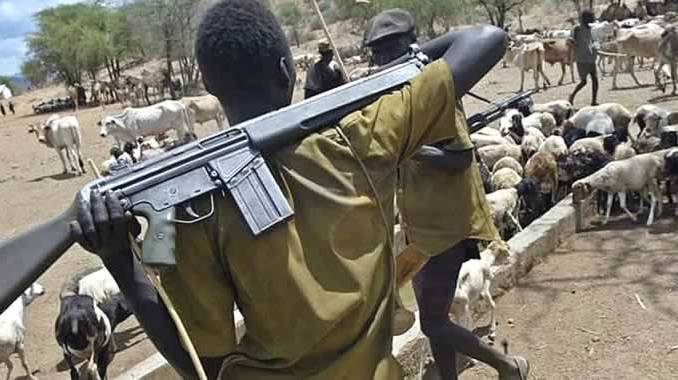
A fresh report which was recently issued by the United States Commission on International Religious Freedom (USCIRF) has revealed that at least 30,000 militant Fulani fighters are currently active within Nigeria in groupings between 10 and 1,000 militants.
In its report released in May 2026, the commission noted that the militants were among the most deadly non-state actors who had been committing serious religious violence across several areas in the country.
As per the report by USCIRF, the acts of violence carried out by the militant groups have especially affected areas in Nigeria’s Middle Belt and Southern regions.
In the report titled “Nonstate Violators of Religious Freedom in Nigeria: Fulani Militants,” the commission said the attacks had resulted in thousands of deaths, widespread displacement and growing tensions among religious communities.
According to USCIRF, violence linked to Fulani militant groups accounted for more deaths in the past year than attacks carried out by insurgent organisations and criminal gangs combined.
“Violence by Fulani militants caused the highest number of deaths among all religious communities in Nigeria over the last year as compared to attacks by organised insurgent groups and criminal gangs,” the report stated.
The commission noted that while many attacks targeted Christian communities, Muslim communities had also suffered killings, raids and kidnappings.
USCIRF explained that although the militant groups do not operate under a central leadership structure, some maintain operational links with criminal gangs and extremist organisations.
“These actors operate in a variety of contexts and with a multiplicity of likely aims and motivations,” the report noted.
“While many Fulani militant groups wage independent attacks, others periodically coordinate with a wide range of other actors, from conventional bandit gangs seeking financial enrichment to recognised terrorist organisations that espouse a violent interpretation of Islam.”
The report stated that the militants frequently launch night attacks on rural communities using motorcycles, automatic rifles and machetes.
“They often wield machetes and descend on vulnerable communities during the night, eliciting terror as a way to force victims to quickly leave and to achieve greater control of desired land,” USCIRF added.
The commission disclosed that attacks by Fulani militants and other armed groups have displaced at least 1.3 million people across the Middle Belt, forcing many victims into overcrowded camps with poor sanitation and inadequate security.
The report cited several deadly incidents recorded in 2025 and early 2026, including attacks in Benue and Plateau states.
“One attack in Benue in June 2025 killed at least 200 people, including internally displaced persons living in a Catholic mission,” the report said.
USCIRF also referenced the Yelwata massacre in Benue State, where more than 200 Christians — mostly women and children — were reportedly killed, while over 3,000 people were displaced.
According to the report, some attacks were deliberately timed to coincide with Christian religious celebrations such as Easter and Christmas.
“Militant actors have often carried out operations during Christian holidays such as Christmas or Easter to further maximise the psychological impact,” it stated.
The report further alleged that in February 2026, suspected Fulani militants killed at least 32 people in Niger State and attacked Holy Trinity Parish in the Kafanchan Diocese of Kaduna State, killing three worshippers and abducting 11 others, including parish priest Father Nathaniel Asuwaye.
USCIRF also documented attacks on Muslim communities, including the abduction of an imam and seven worshippers from a mosque in Plateau State in February 2026, where kidnappers reportedly demanded a ₦16 million ransom.
The report said Palm Sunday and Easter attacks in April 2026 also left dozens dead in Plateau, Kaduna and Benue states.
“On Easter Sunday, Fulani militants reportedly killed five worshippers at two churches in Kaduna State while abducting 31 others,” the commission stated.
USCIRF noted that debates over the root causes of the violence have complicated efforts to address the crisis.
“Some observers have argued that environmental and economic factors are the driving force behind Fulani militants’ acts of violence, while others have suggested that these actors are engaged in a concerted campaign of outright genocide against non-Muslims, especially Christians,” the report said.
“In fact, multiple and overlapping factors, including religion in many cases, likely spur Fulani militants to attack communities or individuals.”
The commission criticised Nigerian authorities for what it described as inadequate responses to the violence, noting that affected communities frequently complained of delayed security intervention.
“Victims have long reported that security forces are consistently slow to respond to attacks on their communities,” USCIRF stated.
The report added that some Christian advocacy groups accused security agencies of bias during investigations and security operations.
USCIRF noted that governors from 11 states launched ranching initiatives in June 2025 to reduce clashes between herders and farming communities over grazing routes and land use.
At the federal level, the commission linked recent government action to the October 2025 decision by then US President Donald Trump to designate Nigeria as a Country of Particular Concern over religious freedom violations.
According to the report, President Bola Tinubu subsequently classified kidnappers and violent armed groups, including Fulani militants, as terrorists in December 2025.
The commission also highlighted security operations carried out in January 2026, during which authorities reportedly rescued 309 kidnap victims in Kogi and Kwara states, arrested 129 suspected militants and killed 55 others.
USCIRF further referenced growing scrutiny of the Miyetti Allah Cattle Breeders Association of Nigeria (MACBAN), which some Christian leaders accused of failing to stop violent attacks and land invasions allegedly linked to armed herders.
However, the association denied supporting violence or criminal activity.
“We do not support, condone, harbour, finance, or protect any form of criminality, extremism or violence,” MACBAN reportedly said.
The report also noted that the United States Congress introduced the Nigeria Religious Freedom and Accountability Act of 2026, which proposes sanctions against MACBAN over allegations of involvement in severe religious freedom violations.
Despite ongoing security measures and peace initiatives, USCIRF warned that violence remained widespread across many parts of the country.
“As a result, central Nigeria remains entrenched in an intense, daily, and seemingly perpetual crisis of insecurity,” the report concluded.
The commission warned that the crisis may continue unless federal and state governments create conditions that allow citizens to safely practise their religious beliefs without fear.






Bernardo Silva joins Real Madrid on a two-year deal

Mbappe fires France past Senegal in World Cup opener

Real reason I stopped going to church – Nicki Minaj

‘I’m prepared to pay any price, Oyo won’t become another Chibok under my watch’ – Makinde speaks on rescue of abducted schoolchildren

Peter Obi: I’ll engage Gumi, Igboho, others through dialogue if elected president

Former Man United boss Ruben Amorim named AC Milan head coach

Tinubu will earn Nigerians’ trust again in 2027 – Matawalle

Relief for Atiku as Appeal Court stops deregistration of ADC, 4 other political parties

Gunmen storm NIPSS in Plateau, murder 3 security guards

FIFA World Cup: Belgium rescue draw as Egypt’s historic win slips away
Peter Obi: I’ll engage Gumi, Igboho, others through dialogue if elected president

Armed men kidnap Ondo traditional ruler, open fire on wife

Military bombards terrorist strongholds, eliminates 27 insurgents in Borno

11 feared dead as boat returning from burial capsizes in River Benue

‘Akpabio has personal interest in NNPC, his daughter got juicy position through Kyari’ – Oshiomhole

‘How our father’s corpse was released remains a mystery’ — Gen. Abubakar’s son

Widow of Late Gen. Rabe freed after weeks in bandits’ captivity
Relief for Atiku as Appeal Court stops deregistration of ADC, 4 other political parties

2027: Kwankwaso’s son emerges NDC Deputy Governorship candidate in Kano