
News
Tinubu directs 180-day plan for digital free zones initiative

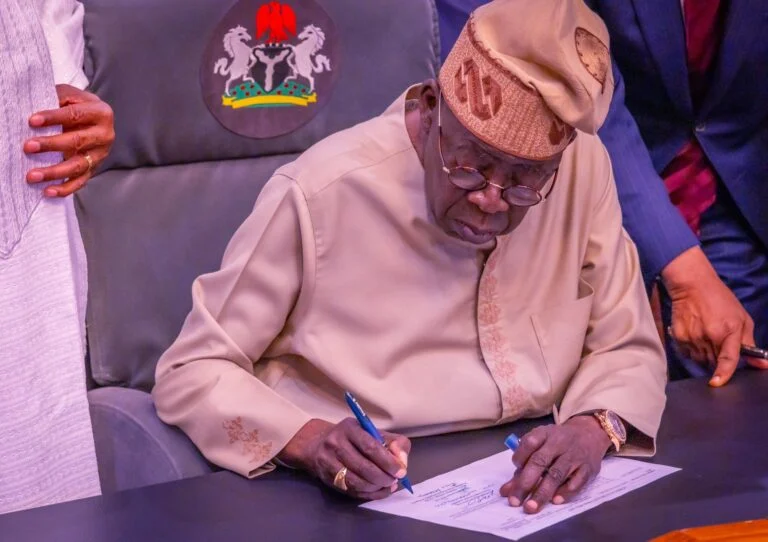
President Bola Ahmed Tinubu has taken the Nigeria Digital Free Zones project from its concept stage into the implementation stage with the Federal Government focusing on attracting more investments globally, job creation, and the development of Nigeria’s digital economy.
This project will facilitate easier access for Nigerian tech and services firms to the international market while operating from Nigeria.
Under the plan, the government also aims to create more opportunities for Nigerians to work remotely for global companies and expand the domestic ecosystem of engineers, developers, designers, lawyers, accountants and other professionals supporting digital businesses.
Tinubu said Nigeria had the talent and entrepreneurial capacity to build globally competitive companies, adding that government had a responsibility to create an environment where Nigerians could realise that potential without relocating their businesses abroad.
“Nigeria has the talent, enterprise and ambition to build companies that can compete anywhere in the world. Our responsibility as a government is to ensure that Nigerians do not have to leave Nigeria or rely on other jurisdictions to realise that potential,” the President said.
Tinubu has directed the Minister of Trade and Investment, Dr Jumoke Oduwole, who serves as Vice-Chairman and Implementation Coordinator of the Presidential Steering Committee on Digital Free Zones, to work with the Itana Innovation project and the committee to develop a roadmap for the full launch of the initiative within 180 days.
The President established and chairs the Presidential Steering Committee as part of efforts to modernise Nigeria’s free zone framework, which was created more than three decades ago, to meet the needs of the digital economy.
Tinubu said the initiative was partly aimed at addressing the practice of Nigerian entrepreneurs establishing companies and registering intellectual property abroad to gain access to international capital and markets.
“For too long, some of our most promising young entrepreneurs have felt compelled to establish their companies and intellectual property abroad to access global capital and markets. I do not accept that this must remain the case,” he said.
The President said his administration wanted the next generation of African technology, financial and service companies to be established and scaled from Nigeria.
Itana, described by the Presidency as Nigeria’s first Digital Free Zone, has already been licensed by the Nigeria Export Processing Zones Authority (NEPZA) and provides a platform for global and pan-African digital and service businesses to establish and operate from the country.
The Africa Finance Corporation is backing the $500 million Itana Innovation project at Alaro City in Lagos.
According to the Presidency, the project will combine an enabling policy environment with an innovation campus, access to capital and ecosystem services aimed at helping African startups scale while retaining more of the value they generate on the continent.
Tinubu said the initiative would go beyond the development of technology parks, stressing that the government wants companies serving international markets to be incorporated, financed and governed from Nigeria.
“We want African companies to be incorporated in Nigeria, financed here and governed from here, while serving markets across Africa and the world,” he said.
He added that Nigerians across the country should be able to work for global companies without necessarily relocating abroad.
“I want a young Nigerian in Kano, Enugu, Warri, Minna, Maiduguri or Ibadan to be able to work for a global company without leaving home, and I want our founders to raise capital globally while their companies and intellectual property remain in Nigeria,” Tinubu said.
The Presidential Steering Committee is expected to continue work on regulatory, taxation, banking, immigration and arbitration issues, as well as the digitisation of government processes within Nigeria’s free zones.
The initiative is also expected to position Nigeria to benefit from the expansion of Africa’s digital economy and digitally enabled trade under the African Continental Free Trade Area.
Tinubu said Nigeria had the human capital and market size to play a bigger role in Africa’s technology and digital economy value chain.
“Nigeria has the talent and the market to reshape Africa’s place in the global technology and digital economy value chain,” he said.
“This is what our Renewed Hope commitment to a digital economy looks like in practice, and this is how we transform reform into opportunities.
“We made a promise to Nigerians. We are keeping it,” the President added.
The statement was signed by Bayo Onanuga, Special Adviser to the President on Information and Strategy, and dated September 17, 2026.

2027: Obi-Kwankwaso Movement names 59-member Presidential Campaign council

Taraba mining pit collapse leaves 20 feared dead, trapped

Tinubu directs 180-day plan for digital free zones initiative

Why Aisha Buhari visited me, Atiku reveals

Nigeria’s Falconets beat England 3-0 to advance to World Cup Quarter-Finals

FAAC shares N2.338tn August revenue among FG, States, LGs

Lagos APC unveils 2027 campaign council, names Sanwo-Olu, Fashola, Ambode, Gbajabiamila

Nigerian Army rescues 22 kidnap victims in Niger

Tinubu: I did not submit fake NYSC certificate to INEC
National Assembly forwards 2026 Constitution Amendment Bill to States

Resident doctors shut down LASUTH over unpaid allowances

Shettima arrives Nigeria after attending BRICS Summit in India

FG signs N729bn bond to clear power sector debts

Benue: Troops rescue seven kidnap victims from criminal hideout

Anambra govt releases records of alleged unpaid debts incurred under Peter Obi

Nollywood Veteran Olu Jacobs dies at 84

Workers shut Education Ministry entrance, demand Alaussa’s removal

Three vigilantes die in fresh attack in Plateau community

Gunmen attack Imo community, kill two, injure several others
