
Politics
Ekiti Polls: INEC commences real-time results upload on IReV

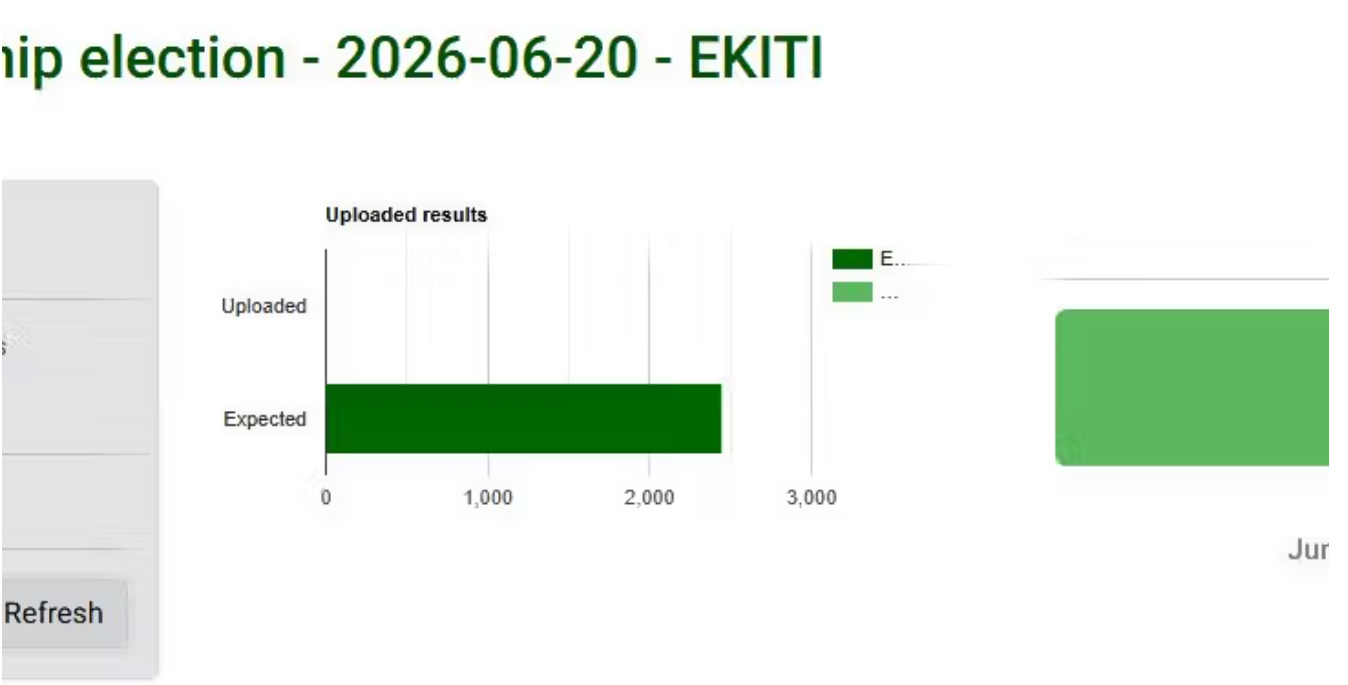
The Independent National Electoral Commission (INEC) has started uploading the results of the polling units from the Ekiti gubernatorial election into its Results Viewing Portal (IReV), nearly two hours after the conclusion of voting.
While the electoral body commenced the process of uploading the results at around 4:10 pm on Saturday, the decision to do so followed earlier complaints that there were no results of the polling units uploaded to the portal even after voting and counting had concluded in some places.
Before the process of uploading started, images of the result sheets of the polling units had begun circulating widely online and among the election observers, political parties, and voters.
The failure by INEC to upload the results of the polling units to IReV is following the earlier complaints by Yiaga Africa regarding inconsistencies in the election materials provided for the conduct of the elections.
A press release issued on Saturday by Aisha Abdullahi, who is the chair of Yiaga Africa 2026 Ekiti election observation mission and Samson Itodo, the executive director of the organization.
“Specifically, the Form EC8A polling-unit result sheets provide spaces for 15 political parties; the ballot papers in circulation carry 19 parties; while INEC’s final list of candidates, as updated and available on the INEC website as of 18th June 2026, reflects 14 parties that fielded candidates,” the statement reads.
“Yiaga Africa recognizes the context. After INEC published its initial list of 12 candidates in January 2026, subsequent court rulings (notably on the PDP’s candidacy) and late administrative changes altered party and candidate participation.
“Some of those changes do not appear to have been fully and consistently reflected across all election materials. Also, the public may not have fully received information about these changes. These inconsistencies might create confusion during voting and collation.
“Where result sheets include parties that are not on the ballot, presiding officers may record zero votes for parties that voters did not see.
“Conversely, where voters cast ballots for parties not reflected on the result sheet, such actions could create uncertainty in recording, reconciliation, and collation.”
Yiaga Africa called on INEC to publicly clarify the final list of participating parties and candidates and explain the differences observed across election materials.
The organisation also urged the commission to issue clear written instructions to presiding and collation officers on completing result sheets in line with electoral laws and court decisions.
Earlier in the day, voting was slowed in several polling units due to challenges with the bimodal voter accreditation system (BVAS), particularly during the accreditation of elderly voters.
At Polling Unit 007 in Ado ‘J’ Okesa, a 90-year-old woman was unable to complete biometric verification after the device repeatedly failed to capture her fingerprints and facial image.
Similar incidents were reported in other polling units across the state.
At Ugele/Arokun ward 006 in Ikere LGA, only three voters had been accredited as of 8:30am due to BVAS-related difficulties.
Mercy Omeiza, presiding officer at Polling Unit 13, ward 20, Iyin 1, Iyin-Ekiti, said election officials repeatedly encountered challenges while accrediting elderly voters.
“The BVAS is not capturing most of the old people. We asked them to wait and sit while we keep trying and trying,” she said.
“I heard other polling units around are also facing the same challenge.”

2027: Obi-Kwankwaso Movement names 59-member Presidential Campaign council

Taraba mining pit collapse leaves 20 feared dead, trapped

Tinubu directs 180-day plan for digital free zones initiative

Why Aisha Buhari visited me, Atiku reveals

Nigeria’s Falconets beat England 3-0 to advance to World Cup Quarter-Finals

FAAC shares N2.338tn August revenue among FG, States, LGs

Lagos APC unveils 2027 campaign council, names Sanwo-Olu, Fashola, Ambode, Gbajabiamila

Nigerian Army rescues 22 kidnap victims in Niger

Tinubu: I did not submit fake NYSC certificate to INEC
National Assembly forwards 2026 Constitution Amendment Bill to States

Resident doctors shut down LASUTH over unpaid allowances

Shettima arrives Nigeria after attending BRICS Summit in India

FG signs N729bn bond to clear power sector debts

Benue: Troops rescue seven kidnap victims from criminal hideout

Nollywood Veteran Olu Jacobs dies at 84

Workers shut Education Ministry entrance, demand Alaussa’s removal

Three vigilantes die in fresh attack in Plateau community

Anambra govt releases records of alleged unpaid debts incurred under Peter Obi

NNPCL increases petrol price to N1,430 per litre
