
World
Trump suffers legal setback as US Supreme Court rejects birthright citizenship bid

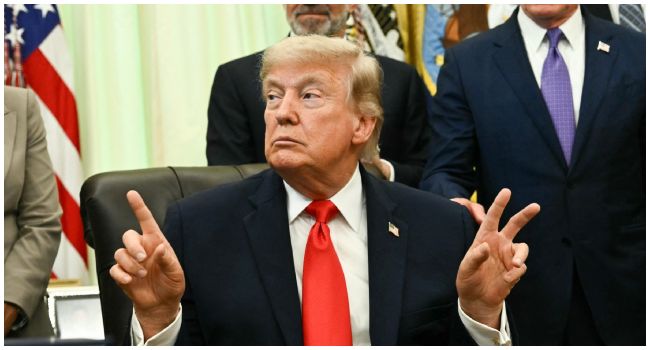
The United States Supreme Court has overturned President Donald Trump‘s Executive Order which aims to restrict the provision of birthright citizenship, emphasizing that all people born within American soil are automatically entitled to US citizenship.
With an overwhelming 6-3 vote on Tuesday, the US Supreme Court upheld a 150-year-old practice in recognizing the right of citizenship for persons born within American borders, regardless of whether or not their parents are in the country legally.
This is certainly a blow to Trump whose presidential campaign was based mainly on putting an end to birthright citizenship in America.
President Trump signed the executive order immediately after returning from Mar-a-Lago where he has been spending his vacation. The executive order seeks to revoke automatic citizenship of children born in America of parents without citizenship papers.
Opponents of the policy argued that the order violated the 14th Amendment of the US Constitution, which states that persons “born or naturalised” in the United States are citizens.
Writing for the majority, Chief Justice John Roberts said children born to parents residing in the US unlawfully or temporarily are “citizens at birth” under the Constitution.
Roberts cited the historical origins of the 14th Amendment, which was adopted after the American Civil War to settle questions surrounding the citizenship of formerly enslaved people born in the United States.
“Citizenship, then and now, was the right to have rights – to freely participate in our political community. The Framers of the Fourteenth Amendment extended that promise to ‘every free-born person in this land,’” Roberts wrote.
“We keep that promise today.”
The ruling preserves a longstanding constitutional interpretation that has been in place for more than a century and a half and reinforces the principle of birthright citizenship in one of about 30 countries worldwide that grant automatic citizenship to anyone born within their borders.
Legal observers noted that although Trump’s legal team succeeded in bringing a once-fringe constitutional argument before the nation’s highest court, a majority of the justices declined to overturn longstanding precedent or reinterpret the Constitution to support the president’s position.
The decision is expected to trigger a strong reaction from Trump, who has repeatedly criticised birthright citizenship.
During his 2015 presidential campaign, Trump described the policy as “the biggest magnet for illegal immigration” and has consistently argued that it encourages unlawful migration into the United States.
Only weeks before the ruling, Trump reiterated his opposition on his social media platform, saying the US “cannot live with the shackles” of birthright citizenship.
“It is not economically, or otherwise, sustainable and no other country in the world, of consequence, does it,” he wrote.
The Supreme Court’s ruling effectively blocks the implementation of the executive order and reaffirms constitutional protections for children born in the United States, regardless of their parents’ immigration status.

World Cup: Egypt eliminate Australia 4-2 on penalties, reach Last 16

INEC extends continuous voter registration deadline, launches online self-registration

Bandits launch deadly raid, kill traditional leader, son in Sokoto

Victims flee captivity after kidnappers fall asleep in Edo

Federal Government announces ₦39.63bn pension arrears payment

Court orders final forfeiture of ₦150m linked to Delta Lawmaker

Family finds missing son in Rivers prison after 18 years, says his name was changed

Napoli appoint Massimiliano Allegri as new manager following Conte’s exit

Gunmen ambush ex-Benue SSG Prof. David Salifu, dies from sustained injuries

World Cup: Ronaldo, Ramos seal Portugal’s Last-16 qualification against Croatia

Gbajabiamila cleared as Presidency rejects ₦400m bribery allegation, labels it scam

Jigawa sets ₦7.5m initial Hajj fare deposit for 2027 pilgrims

FRSC Recruitment 2026 Opens: How SSCE holders, graduates, artisans can apply

2026 FIFA World Cup: Five African Nations eliminated so far as continental dream faces fresh setback

Coup: 5 face trial over alleged plot to hide ex-gov Sylva

Naira appreciates further, trades at ₦1,385 per dollar in parallel market

‘Explain the ₦1.3bn budget for fake agency to Nigerians’ — Atiku slams Tinubu

Unknown gunmen kidnap Pastor, two church members in Benue

Major Police shake-up as PSC elevates 93 officers
