
National News
Federal govt bans honorary degree holders from using ‘Dr’ title

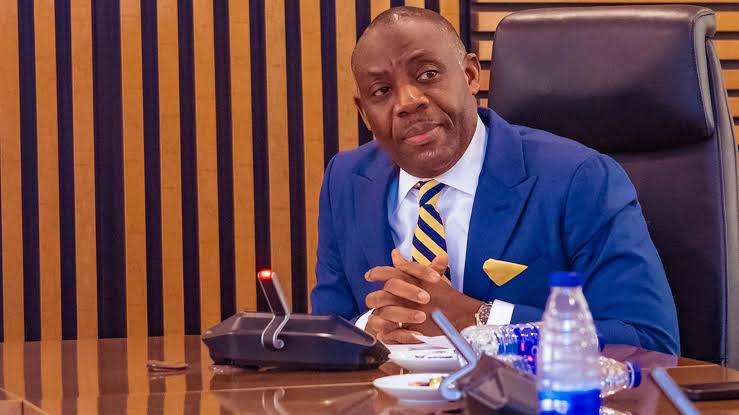
The Federal Government has declared that persons who hold honorary degrees shall not henceforth address themselves as “Dr” in any official, academic, and professional capacity.
According to the declaration, using such a title in such an environment constitutes fraudulent representations of academic credentials. This will from now on be treated as a form of academic fraud.
The Minister of Education, Tunji Alausa, made the disclosure in Abuja on Wednesday at the Presidential Villa while briefing State House journalists on two resolutions passed at the Federal Executive Council, which was not announced during the previous council held on April 30, 2019.
Alausa, who was speaking with the Minister of State for Education, Prof Suwaiba Ahmad, revealed that the FEC endorsed a standard guideline for the conferment and usage of honorary degrees by Nigerian universities.
According to the minister, the guideline has been set up to put a stop to what he referred to as decades of misuse of the degree for monetary benefits and patronage purposes.
He said, “The recent trend we’ve seen with the award of honorary degrees has revealed a growing abuse and politicisation of this academic privilege.
“We’ve seen awards being used for political patronage, for financial gain, as well as the conferral of awards on serving public officials, which, as part of the ethics of honorary degree awards, should not happen.”
Under the new policy, recipients of honorary degrees may no longer put “Dr” before their names.
Instead, they must cite the full honorary designation after their name.
Giving examples, Alausa explained, “For instance, you can use Chief Louis Clark, D.Lit. (Doctor of Literature, Honoris Causa)” or “Mrs Miriam Adamu, LL.D. Hons.”
Alausa said this format clearly reflects the honorary rather than earned academic nature of the award.
Recipients shall not prefix doctor to their names in official, academic or professional usage,” the minister said, adding, “Misrepresentation of honorary degrees as earned academic credentials shall be considered academic fraud and subject to legal and reputational consequences.”
The policy also restricts the types of honorary degrees Nigerian universities can confer to four: Doctor of Laws (LL.D), Doctor of Letters (D.Lit), Doctor of Science (D.Sc), and Doctor of Humanities (D.Arts).
It further bars universities without active PhD-awarding programmes from conferring honorary degrees at all.
Alausa said the restriction was aimed at addressing the proliferation of newer institutions that have been awarding honorary doctorates despite being less than five years old and lacking postgraduate research programmes.
The minister noted that all honorary degrees must carry the words “honorary” or “Honoris Causa” on the award certificate and in all references.
For over a decade, concerns over the commercialisation and politicisation of honorary degrees have been raised in Nigeria’s academic community, with universities often accused of awarding the degrees to wealthy donors and public officials in exchange for financial patronage rather than merit.
In 2012, the Association of Vice-Chancellors of Nigerian Universities attempted to address the challenge in what became known as the Keffi Declaration.
The declaration outlined guiding principles for the award of honorary degrees. However, it had no legal or executive backing and was therefore largely ignored, Alausa said on Wednesday.
He explained, “The association doesn’t have any legal backing to enforce anything.
“That is why we brought this to the Federal Executive Council, which now gives it legal and executive backing.”

Troops rescue five kidnap victims in Kogi as terrorists flee

FG launches FreeTV, offering Nigerians free access to television channels

Bernardo Silva joins Real Madrid on a two-year deal

Mbappe fires France past Senegal in World Cup opener

Real reason I stopped going to church – Nicki Minaj

‘I’m prepared to pay any price, Oyo won’t become another Chibok under my watch’ – Makinde speaks on rescue of abducted schoolchildren

Peter Obi: I’ll engage Gumi, Igboho, others through dialogue if elected president

Former Man United boss Ruben Amorim named AC Milan head coach

Tinubu will earn Nigerians’ trust again in 2027 – Matawalle

Relief for Atiku as Appeal Court stops deregistration of ADC, 4 other political parties
Peter Obi: I’ll engage Gumi, Igboho, others through dialogue if elected president

11 feared dead as boat returning from burial capsizes in River Benue

‘How our father’s corpse was released remains a mystery’ — Gen. Abubakar’s son

‘Akpabio has personal interest in NNPC, his daughter got juicy position through Kyari’ – Oshiomhole

Widow of Late Gen. Rabe freed after weeks in bandits’ captivity
Relief for Atiku as Appeal Court stops deregistration of ADC, 4 other political parties

Gunmen storm NIPSS in Plateau, murder 3 security guards

Five dead as Cholera outbreak hits Plateau communities

2027: Kwankwaso’s son emerges NDC Deputy Governorship candidate in Kano
