
National News
Nigerian Senate tightens rules for leadership positions, limits eligibility to returning Senators

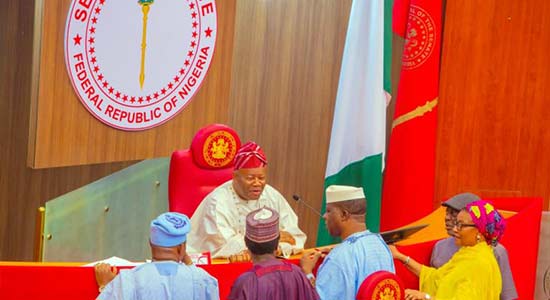
Senate Standing Rules have been amended requiring senators who have served at least two consecutive terms to be qualified for presiding and principal offices.
The amendment came after a voice vote conducted yesterday under the presidency of Godswill Akpabio, Senate President.
Under the amended rules, senators who have served in the Senate for at least eight years would be the only ones eligible to run for the positions of senate president and deputy senate president.
The senate met for nearly three hours before amending their rules yesterday.
The amended order makes it harder for senators to become leadership positions within the 11th national assembly.
Order 4 of the amended order states that the nomination of senators for presiding offices should only be done according to the following ranking:
Former senate president, former deputy senate president, former principal officers, senators who have served at least one term, former members of the house of representatives, and lastly first time senators where others are not available.
Order 5 of the amended rule further requires a new qualification for senators to be considered eligible for principal offices.
Under this amendment, no senator is qualified for any principal position if he has not served at least two consecutive terms before nomination.
It is noteworthy that the amendment disqualifies new senators in the 11th national assembly from being members of both the 9th and 10th senates.
Some of the presiding offices available in the senate are senate president and deputy senate president.
Some of the principal offices are senate leader, deputy senate leader, chief whip, deputy chief whip, minority leader, deputy minority leader, minority whip, and deputy minority whip.
The amendment will also have an impact on possible candidates for the leadership of the senate in 2027.
According to reports, Adams Oshiomhole, the senator representing Edo North, was the only senator who dissented when the senate voted on the resolution in the voice.
In his attempt to raise a point of order, he was consistently overruled by the senate president.
“This is not what we discussed behind closed doors,” Oshiomhole stated as Akpabio was reading the resolution.
Prior to the amendment, any ranking senator, a senator who has been a member of the senate for four years or more, could run for presiding office.
Other amendments also came from the senate.
In Order 8 (1), the period for meetings of the committee was fixed between 3 pm and 6 pm from Monday through Friday except the second and fourth Fridays of the month.
Order 8 (2) states that plenary meetings will take place Tuesday through Thursday from 11am-3 pm except for any extension which may be decided by the senate leader.
Order 55 (11) was amended to authorize presiding officers and nominees who go through screening to drink water during plenary.
Amendment to section 66 (8) states that suspended senators should withdraw from the plenary as ordered by the senate president. The period of suspension will depend on resolution.
Section 94 (1) says that committee members will range between seven and 25.
Also, the amendment provides that not more than seven committees can accommodate a senator, and that such appointment should consider the six geopolitical zones.
Section 96 provided the power for the senate to oversee regional development commission in the six geopolitical zones.
The senate formed a new committee called the committee of reparation and repatriation.
Akpabio later instructed Emmanuel Odo, clerk of the senate, to amend the standing rules.

Lagos: Several rescued as multiple vehicles collide on Otedola Bridge

2023: Only 6 of 19 Northern governors supported Tinubu, says Shettima

Man remanded for allegedly killing friend with cutlass

Kano Anti-Graft Agency chairman steps down

Anambra govt releases records of alleged unpaid debts incurred under Peter Obi

Benue: Troops rescue seven kidnap victims from criminal hideout

Three vigilantes die in fresh attack in Plateau community

Workers shut Education Ministry entrance, demand Alaussa’s removal

First Lady Remi Tinubu gifts N20m to Qur’anic competition winner

Lagos Assembly approves 2026 Budget Reordering Bill

Desmond Elliot kneels before Gbajabiamila, seeks forgiveness

Resident doctors shut down LASUTH over unpaid allowances

Bandits invade Sokoto community, abduct eight residents, steal livestock

Anambra govt: Soludo still repaying loans inherited from Obi, Obiano

FG directs immediate disbursement of funds to Regional Development Commissions

Shettima arrives Nigeria after attending BRICS Summit in India

2027 Budget: FG plans September submission to National Assembly

Spain: Ikpeazu presents credentials to King, Begins Ambassadorial Assignment

Anambra: Kidnappers abandon victim, escape at Police checkpoint
