National News
US withdraws troops from Nigeria following counterterrorism mission

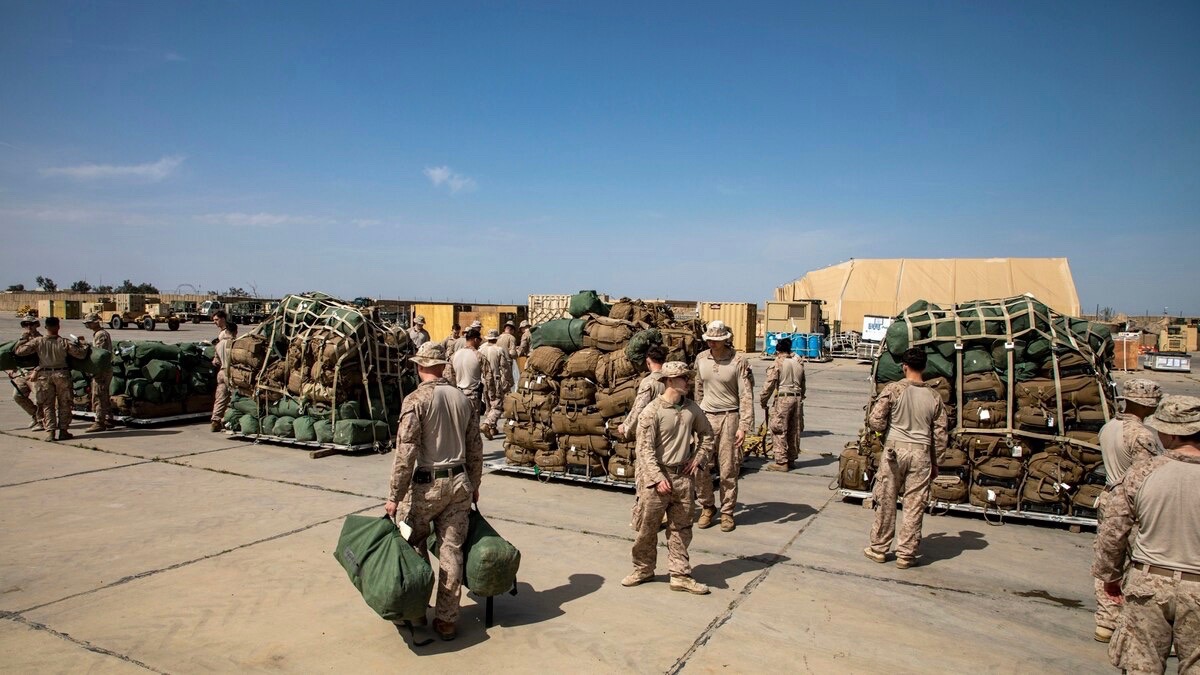
The United States has pulled out the bulk of its military forces stationed in Nigeria to participate in a counter-terrorism campaign in the Lake Chad Basin area, although cooperation regarding intelligence matters will remain intact.
This was revealed by General Dagvin R.M. Anderson, the commander of US Air Forces in Africa, during a virtual press conference on the result of the African Chiefs of Defence Conference 2026. As per Anderson, the relationship between Washington and Abuja remains intact especially in intelligence operations against ISIS/Daesh.
Anderson pointed out that the mission which necessitated the US forces’ participation has now been accomplished, and therefore there is the need to pull out the majority of the forces. However, Anderson added that the United States will still assist in intelligence matters when requested by Nigeria.
“And so that operation in the Lake Chad Basin of Nigeria not only helped the countries in that immediate region; it also helps countries globally as that disrupts the ISIS network,” Anderson said.
“And so — and then we have withdrawn much of our forces that were just there for that operation, but are continuing the partnership that Nigeria has asked for to help continue with the intelligence sharing and the understanding that’s necessary to be able to prosecute these difficult tasks,” he added.
The US Air Force commander described Nigeria as a key regional partner with a capable military, saying the collaboration between both nations had produced notable gains in the fight against ISIS.
He credited intelligence cooperation between the two countries for enabling an operation that eliminated the second-highest-ranking figure in the global ISIS network.
“I think the partnership that we’ve shown recently with Nigeria, where Nigeria’s a very capable and large country — it’s got a strong economy; it’s got a large, educated population; it’s got a very capable military.
“But there are things that we have learned in the counterterrorist fight over several years that we were able to assist and integrate with them to help them with their intelligence and help with the intelligence sharing that eventually led to a cooperative effort to where we were able to bring some unique capabilities that the U.S. brings and be able to prosecute together the number two leader within the ISIS or Daesh organization who is responsible for much of their global operations, their global media, and their recruiting”, he said.
Anderson said the operation underscored the effectiveness of intelligence collaboration over prolonged foreign troop deployments.
“So I think as we go forward, that is an example of how we’re looking at engaging with partners to help them be more effective by only bringing unique U.S. capabilities that allow the partner to be effective in these fights,” he said.
He also called for deeper intelligence cooperation among African countries to tackle terrorism, drug trafficking and other cross-border crimes.
The US commander cited a recent multinational operation that intercepted a record 31-ton shipment of cocaine originating from South America and passing through the West African coastline, saying effective intelligence sharing made the seizure possible.
“I was able to coordinate through our interagency in the United States, through AFRICOM, and then notify some of the partners. And eventually it was a Spanish ship that interdicted the ship that had 31 tons of cocaine on it, and it turns out is the largest interdiction of drugs at sea that we’ve ever seen,” Anderson said.
In addition, he noted that teamwork between African governments and their international partners in the government and private sector would be important in dealing with security problems and ensuring economic growth and investments in Africa.
The US government sent about 200 troops to Nigeria in February 2026 to help in intelligence gathering and counter-terrorism in Lake Chad Basin as both countries stepped up their fight against ISIS and other extremist organizations.
This came after US President Donald Trump redesignated Nigeria as a Country of Particular Concern and promised more US support for counter-terrorist missions.
US troops launched attacks on two terrorist training camps in the Bauni Forest in the Tangaza Local Government Area of Sokoto State on December 25, 2025.
A significant development in the security cooperation was recorded in May 2026 when a joint mission by US and Nigerian forces killed Abu-Bilal Al-Minuki who was the second-in-command of ISIS in a strike mission in Borno State.

World Cup: Egypt eliminate Australia 4-2 on penalties, reach Last 16

INEC extends continuous voter registration deadline, launches online self-registration

Bandits launch deadly raid, kill traditional leader, son in Sokoto
Victims flee captivity after kidnappers fall asleep in Edo

Federal Government announces ₦39.63bn pension arrears payment

Court orders final forfeiture of ₦150m linked to Delta Lawmaker

Family finds missing son in Rivers prison after 18 years, says his name was changed

Napoli appoint Massimiliano Allegri as new manager following Conte’s exit

Gunmen ambush ex-Benue SSG Prof. David Salifu, dies from sustained injuries

World Cup: Ronaldo, Ramos seal Portugal’s Last-16 qualification against Croatia

Gbajabiamila cleared as Presidency rejects ₦400m bribery allegation, labels it scam

Jigawa sets ₦7.5m initial Hajj fare deposit for 2027 pilgrims

FRSC Recruitment 2026 Opens: How SSCE holders, graduates, artisans can apply

2026 FIFA World Cup: Five African Nations eliminated so far as continental dream faces fresh setback

Coup: 5 face trial over alleged plot to hide ex-gov Sylva

Unknown gunmen kidnap Pastor, two church members in Benue

‘Explain the ₦1.3bn budget for fake agency to Nigerians’ — Atiku slams Tinubu

Major Police shake-up as PSC elevates 93 officers

Naira appreciates further, trades at ₦1,385 per dollar in parallel market
