
News
How Ojukwu secretly imported weapons ahead of civil war – Gowon

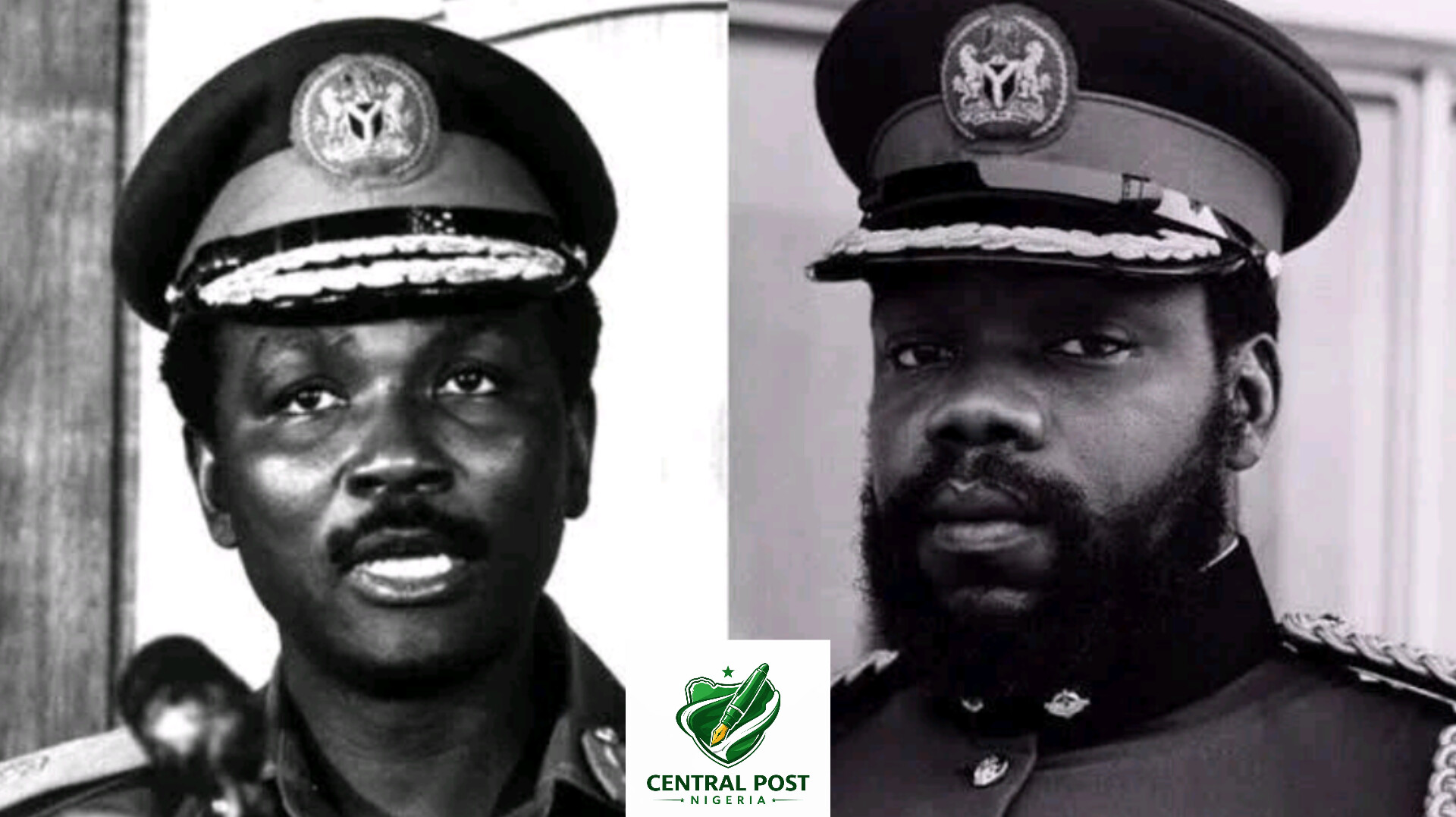
Former Military Head of State of Nigeria, General Yakubu Gowon, has disclosed the process by which weapons and ammunition were brought into Eastern Region from some other foreign countries ahead of the civil war that lasted for 30 months.
According to General Gowon, the civil war in which thousands of lives were reportedly lost could have been averted if then head of Eastern Region Chukwuemeka Odumegwu Ojukwu had lived up to the terms of agreement made at the Aburi Accord in Ghana in January 1967.
General Gowon made this disclosure while presenting his autobiography titled, ‘My Life of Duty and Allegiance’ in Abuja Tuesday evening.
The event, which was presided over by former President Goodluck Jonathan, was well attended by leading figures in Nigeria including President Bola Tinubu whose representative is Deputy President Kashim Shettima.
During the civil war, President Gowon was the head of state in Nigeria. The civil war was waged from 6th July 1967 to 15th January 1970.
This conflict was occasioned by many ethnic, political and economic problems that arose in Nigeria just a few years after attaining its independence from Britain in 1960.
During those times, Nigeria consisted of four major regions namely the Northern Region which had mainly Hausa-Fulani people, the Eastern Region which was mainly dominated by Igbo, and the Western Region where Yorubas mainly lived. There was another region formed in 1963 called the Mid-West Region from the Western Region.
Mr. Ojukwu who was a colonel in the Nigerian army led the Eastern Region which declared itself the republic of Biafra in a bid to be independent. This caused the civil war, resulting in the death of about 1 to 3 million people either by starvation or disease.
Mr Ojukwu passed on 26th November 2011, in London aged 78 years. It is said that he had been suffering from an illness leading to his death. His remains were brought back to Nigeria where he got a state burial before finally being laid to rest in Nnewi of Anambra State, Nigeria in March 2012.
According to the book, in his efforts to avoid the conflict, Mr Gowon presented several options to the Eastern Region’s leader who allegedly preferred fighting to dialogue according to him.
The head of state went further to explain that despite many efforts to seek dialogue with Mr Ojukwu prior to the war, the Eastern Region’s leader failed to accept owing to the fear for his own life outside the region.
He elaborated that as a result, the Head of State of Ghana at that time, Joseph Ankrah, managed to arrange for a meeting between both sides in Aburi, Ghana at Peduase Lodge.
According to him, Mr Ojukwu finally consented to participate in the conference, whose timing was concurrent with the time for the Christian Passion Week and the Islamic Ramadan month.
He reported that during the conference, the leader of the Eastern Region came up with conditions that mainly suited the demands of the East side; renunciation of the use of violence was one such condition.
“Ojukwu’s motion that all parties renounced the use of force in the settlement of the brewing crisis certainly sat well with me and the rest of the SMC (Supreme Military Council) members. Indeed, it was the most pragmatic thing to do if we were to set on an honest path to peace,” he said.
Mr Gowon, however, claimed that Mr Ojukwu’s proposals were also aimed at buying time to complete the stockpiling of arms and ammunition for the impending war.
The former head of state further alleged that the Eastern Region’s arms build-up suffered a setback in October 1966 after a DC-4 aircraft carrying weapons crashed in the hills of Northern Cameroon.
“It did not matter that his plan was to buy some more time to enable him to stockpile arms and ammunition. We were also mindful that he had cleverly planned to apply the brakes on our ability to deploy the numerical advantage of the existing firepower of the Nigerian Army in the event of an immediate outbreak of hostilities.
“We knew he was compelled to buy time because his surreptitious arms build-up had suffered a serious setback in October 1966 with the crash in the hills of Northern Cameroons of the DC-4 aircraft with which he had hoped to smuggle in a cache of arms,” he claimed.
Mr Gowon said Mr Ojukwu later appeared to confirm the arms stockpiling during a meeting in Enugu in May 1967 with a delegation of the National Conciliation Committee comprising Obafemi Awolowo, Samuel Aluko, Jereton Mariere and J.I.C. Onyia.
He further said Mr Ojukwu declared during the meeting that the Eastern Region had attained “equality of arms,” which would allow it to negotiate Nigeria’s future from a position of strength.
“Several months after the Aburi meeting, Ojukwu confirmed our belief that he had been biding his time to enable him to stock his armoury. In May 1967, at a meeting in Enugu with a delegation of the National Conciliation Committee that comprised Chief Obafemi Awolowo, Prof. Samuel Aluko, Chief Jereton Marierie, and Chief J.I.C. Onyia, who represented the West and Mid-West regions, respectively.
“Ojukwu confidently declared he had attained ‘equality of arms’ that would make possible for the East to discuss to discuss the future of Nigeria based on equality,” he added.
Mr Gowon quoted Mr Ojukwu on that day to have said that “Quietly I built up. If you do not know it, I am proud, and my officers are proud, that here in the East we possess the biggest army in Black Africa. I am no longer speaking as an underdog; I am speaking from a position of power.”
He, however, dismissed the Biafra’s leader’s claim of acquiring equal arms with the government as exaggeration, insisting that federal forces still maintained a clear military advantage over the Eastern Region.
“I did not believe Ojukwu’s play to the gallery; I only said to myself that we would see about that. This was because we knew better. Regardless of his posturing, the reality was that a rough count on military installations and troops in station placed the Eastern region at an obvious disadvantage compared to the rest of the nation.
“This was a plan for all to see, except the governor of the Eastern region, who believed that he could silence machine guns from the federal side with the 120 rifles he claimed to have had and sheer bravado,” he stated.


Oshiomhole retracts forgery claim, says Natasha’s suspension followed due process

“I’m in charge,” Trump tells G7 leaders

Troops rescue five kidnap victims in Kogi as terrorists flee

FG launches FreeTV, offering Nigerians free access to television channels

Bernardo Silva joins Real Madrid on a two-year deal

Mbappe fires France past Senegal in World Cup opener

Real reason I stopped going to church – Nicki Minaj

‘I’m prepared to pay any price, Oyo won’t become another Chibok under my watch’ – Makinde speaks on rescue of abducted schoolchildren

Peter Obi: I’ll engage Gumi, Igboho, others through dialogue if elected president

Former Man United boss Ruben Amorim named AC Milan head coach
Peter Obi: I’ll engage Gumi, Igboho, others through dialogue if elected president

11 feared dead as boat returning from burial capsizes in River Benue

‘How our father’s corpse was released remains a mystery’ — Gen. Abubakar’s son

‘Akpabio has personal interest in NNPC, his daughter got juicy position through Kyari’ – Oshiomhole

Widow of Late Gen. Rabe freed after weeks in bandits’ captivity

Relief for Atiku as Appeal Court stops deregistration of ADC, 4 other political parties

2027: Kwankwaso’s son emerges NDC Deputy Governorship candidate in Kano

Gunmen storm NIPSS in Plateau, murder 3 security guards

Five dead as Cholera outbreak hits Plateau communities