
News
NELFUND seeks EFCC probe of 34 institutions for alleged failure to refund students

The Nigerian Education Loan Fund (NELFUND) claims that more than 34 tertiary schools have been investigated after being accused of failing to repay students who had their tuition fees paid double by the government’s student loan program.
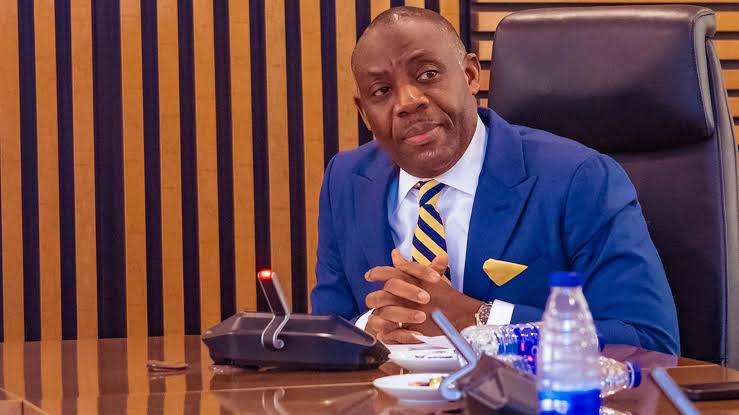
According to Akintunde Sawyerr, the Managing Director of NELFUND, who was talking to Arise Television on Sunday, the fund has sent a five-man delegation that includes agents from the Economic and Financial Crimes Commission (EFCC) and internal auditors to these institutions.
Sawyerr stated that the investigation had come after a lot of complaints from these students.
“As of right now, there are 34 institutions that we are looking at closely with respect to this issue,” Sawyerr said.
The NELFUND boss said the refund issue followed President Bola Tinubu’s directive that the student loan scheme commence in the middle of an academic session rather than at the start of a new one, a situation that led some students to pay their tuition while awaiting loan approval.
“What happened is that a lot of schools got double payment. Some from the students, some from us,” Sawyerr said.
“The refund process is entirely out of our hands. It is the recipient of the double payments that is obliged to make refunds to the students.”
“Some have been very good at this. Others haven’t been so good at it,” Sawyerr said.
“I reserve judgement on the intentionality around it because, for some of them, they just didn’t have the process to make refunds.”
Sawyerr said NELFUND is exploring a tokenised payment system that would allow students to authorise tuition payments directly to their institutions, reducing the likelihood of duplicate payments.
“We chose in our setting up of this not to pay students directly for the loans because that would take us into an entirely new area,” he said.
“Paying the funds to the students, rather, quite significantly, could really lead to the temptation for them to divert and do other things.”
Sawyerr, however, acknowledged that the agency lacks the legal authority to compel institutions to refund students or prosecute erring officials.
Sawyerr said many of the complaints were submitted directly by affected students and, in some cases, copied to anti-corruption agencies.
“Students who are frustrated and unable to get their refunds write to us, but they also write to the EFCC, to the ICPC,” he said.
“Some schools, because they get paid easily, started to put up their fees. We refused, point blank, to pay institutions who had hiked their fees beyond a certain level,” he said.
He said the agency would continue to investigate every reported irregularity while improving the implementation of the scheme.
“We tend to take the view that perhaps it’s not intentional,” he said.
“We institute many investigations, we generate many reports. Any small hint of anything going wrong, we set up a small committee to look at it because we’re trying to learn.”

Okpebholo: Petrol costs over ₦3,000/Litre in UK, Nigerians are enjoying

Military Welfare: FG introduces online discount platform for troops, veterans

Atiku unveils ADC campaign council, Names Akobundu DG, El-Rufai Deputy Chairman

Umahi: Obi is not better than me ahead of 2027

NECO announces release of 2026 SSCE internal results

FIFA names Nigerian referee among officials for U-17 World Cup

Court voids Pantami’s PDP candidacy, orders new primary in Gombe

ECOWAS opens recruitment for qualified nationals across multiple sectors, see how to apply

Namadi presents N46.3bn Supplementary Appropriation Bill to Jigawa Assembly

EFCC declares ex-Pension Task Team chairman Maina wanted
Atiku unveils ADC campaign council, Names Akobundu DG, El-Rufai Deputy Chairman
Unity College staff ignore FG directive, remain on strike
ECOWAS opens recruitment for qualified nationals across multiple sectors, see how to apply

Plateau: Gunmen kill 3 vigilantes, 4 miners die in pit collapse
FIFA names Nigerian referee among officials for U-17 World Cup
NECO announces release of 2026 SSCE internal results
FG plans 4,000 influencers to showcase Tinubu administration’s projects — Umahi
Court voids Pantami’s PDP candidacy, orders new primary in Gombe

JAMB Portal: Steps to change phone number, email address
