
World
Trump declares Iran ceasefire over as Strait of Hormuz tensions escalate

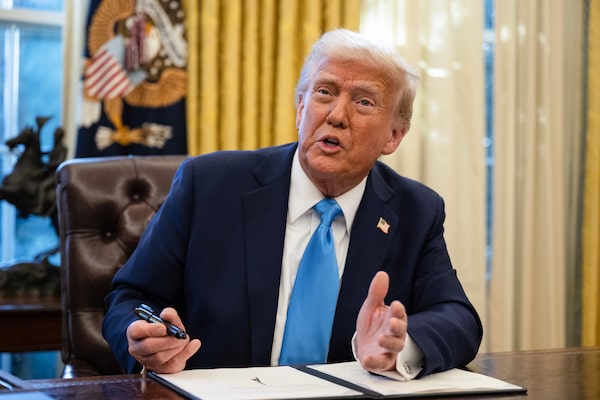
U.S. President Donald Trump has called off the ceasefire with Iran “because there is no ceasefire anymore”, following the resumption of hostilities in the Strait of Hormuz.
The U.S. President announced his decision not to pursue the ceasefire during the meeting with the leaders of NATO member states in Turkey on Wednesday. Trump said that the dialogue with Iran was meaningless.
“As far as I’m concerned, it’s over,” Trump said when asked whether the ceasefire remained in effect.
“It’s just a waste of time dealing with them. I’ll let our wonderful negotiators keep talking if they want, but I don’t see it. I don’t like these people.”
His remarks triggered an immediate reaction in global energy markets, with oil prices rising by about five per cent to their highest level in two weeks.
The latest crisis follows Iranian attacks on commercial vessels in the strategic Strait of Hormuz, a vital shipping route for global oil exports.
The conflict, which began in late February after coordinated US-Israeli strikes on Iranian targets, has intensified in recent days.
Iran has insisted on asserting control over the waterway, proposing transit fees for vessels and warning that ships deviating from routes authorised by Tehran could be targeted.
According to reports, Iran has struck at least three vessels in recent days, prompting the United States to launch extensive retaliatory strikes against more than 80 Iranian military targets.
The US Central Command (CENTCOM) said the operation targeted air defence systems, coastal radar installations and dozens of boats belonging to Iran’s Revolutionary Guards.
The military said the objective was to weaken Iran’s ability to threaten international shipping through the strategic corridor.
Iran responded by claiming it had launched attacks on several US military facilities in Kuwait and Bahrain.
Authorities in both Gulf countries confirmed that their air defence systems had been activated, although no details of casualties or damage were immediately released.
Iranian state media also reported multiple explosions around the Strait of Hormuz, including on Qeshm Island, in Sirik, Bandar Abbas and Bushehr, where the country’s only civilian nuclear power plant is located.
The reports also said a member of Iran’s Revolutionary Guards was killed during the latest exchanges.
Meanwhile, British maritime security agency UKMTO confirmed that three commercial vessels were attacked near the Strait of Hormuz, including ships flying the flags of the Marshall Islands, Saudi Arabia and Liberia.
One of the vessels reportedly caught fire after being struck by an unidentified projectile.
The attack on the Qatari-owned tanker Al Rekayyat drew strong condemnation from Doha, which summoned Iran’s deputy ambassador to protest what it described as an unacceptable attack on international maritime navigation.
Iran rejected Qatar’s accusations, describing them as unacceptable.
The renewed fighting has also placed further strain on the memorandum of understanding signed between the United States and Iran last month.
Iran’s chief negotiator, Mohammad Bagher Ghalibaf, accused Washington of violating the agreement by reinstating sanctions on Iranian oil exports and interfering with Tehran’s plans for administering shipping through the Strait of Hormuz.
The US Treasury Department recently revoked a sanctions waiver that had temporarily allowed Iranian crude exports, a move Washington described as necessary following Iran’s actions in the Gulf.
A US official said Tehran would only enjoy the benefits of the agreement if it demonstrated what Washington described as “good behaviour.”
The Strait of Hormuz remains one of the world’s most critical energy corridors, with a significant share of global crude oil shipments passing through the narrow waterway each day.

Court of Appeal reverses Lokoja judgment, upholds NDC registration

Atiku to Tinubu: Don’t be ashamed, adopt my idea to cut petrol prices

‘Every Nigerian’s life matters’ — Tinubu directs investigation into miners’ deaths

Woman, 4 children burnt to death in Rivers house fire

Borno: Troops thwart attacks, eliminate four terrorists

October 1: Tinubu to address Nigerians as FG announces low-key independence celebration

Nigerian Army opens 92 Regular recruits intake recruitment

2027 Elections: INEC begins Ad Hoc staff recruitment

Illegal Mining: FG suspends NSCDC Commandant in Niger State

Toyin Abraham distances herself from APC 2027 campaign list

Benue: Troops rescue seven kidnap victims from criminal hideout

Workers shut Education Ministry entrance, demand Alaussa’s removal

NAF acquires 5 new helicopters to boost security operations

Three vigilantes die in fresh attack in Plateau community

Anambra govt releases records of alleged unpaid debts incurred under Peter Obi

2023: Only 6 of 19 Northern governors supported Tinubu, says Shettima

Lagos: Several rescued as multiple vehicles collide on Otedola Bridge

Nollywood Veteran Olu Jacobs dies at 84

First Lady Remi Tinubu gifts N20m to Qur’anic competition winner
