
Politics
‘Your comments are driven by anger and bitterness’ – Atiku fires back at Babachir Lawal

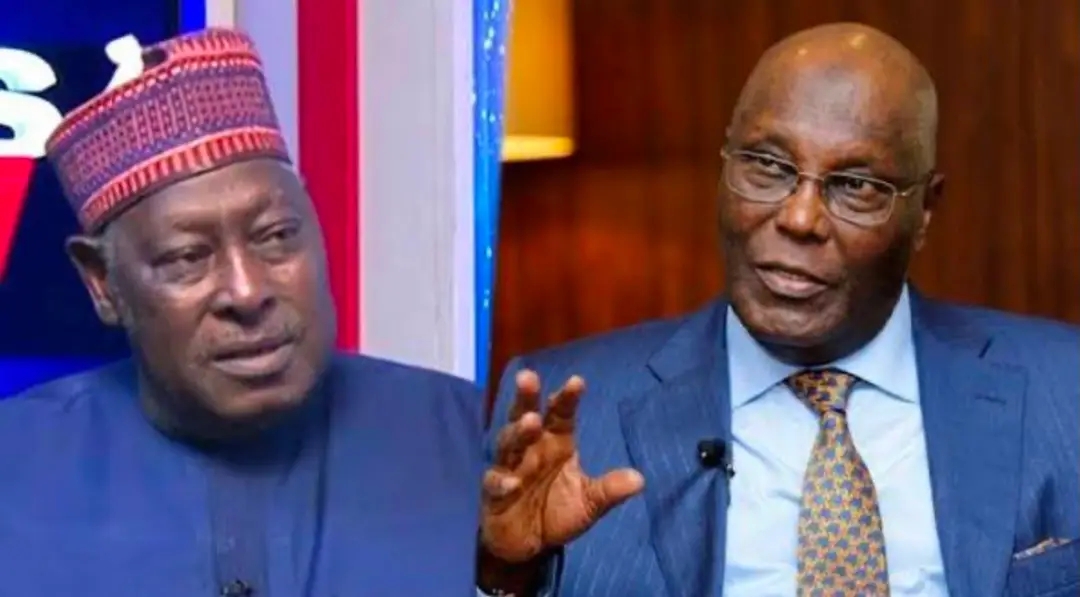
Atiku Abubakar, the former Vice President and presidential aspirant of the African Democratic Congress (ADC), has faulted Babachir David Lawal, the ex-Secretary to the Government of the Federation (SGF), due to his statements made recently in public, accusing him of being bitter and letting his anger affect his thinking process.
According to the statement which was signed by Phrank Shaibu, Atiku’s Senior Special Assistant on Public Communications, it was made available on Sunday.
Atiku accused the SGF of doing more than engaging in normal politics; he claimed that he had indulged in ethnic profiling and spreading conspiracy theories about him.
“His heart appears full of bitterness and his public utterances increasingly reflect anger rather than reason, grievance rather than evidence. While we do not share his hostility, we genuinely pity him. Politics should not reduce a man to a permanent state of outrage,” Atiku said.
“Mr. Lawal would be better served by stepping away from the politics of hate and embracing the kind of reflection and personal healing that can restore perspective and balance. Nigeria needs statesmen, not merchants of bitterness.”
Atiku said it was unfortunate that a man of Babachir’s standing had “chosen to abandon facts and reason in favour of ethnic profiling, prejudice, and conspiracy theories in his desperate attempt to discredit a political opponent.”
According to Atiku, despite Babachir’s lengthy public attacks, he failed to provide any evidence to support what he described as grave allegations against him.
“Throughout his lengthy public attacks, Babachir Lawal failed to present a single piece of evidence to support his grave allegations, choosing instead to invite Nigerians to substitute suspicion for proof and emotion for facts,” the statement said.
Atiku argued that the most troubling aspect of Lawal’s intervention was not the criticism itself, but what he described as repeated attempts to associate an entire ethnic group with criminality.
“He said it was both dangerous and irresponsible to suggest that any Nigerian should be judged, condemned, or held accountable for crimes committed by individuals simply because they share a common ancestry,” he stated.
The former vice president warned that such a mindset had historically fuelled division and weakened national unity.
“By such flawed reasoning, every ethnic nationality in Nigeria could be collectively blamed for the actions of a few criminal elements within their communities, a mindset that has historically fuelled division and undermined national unity,” he said.
Atiku also pointed to what he described as the irony of Babachir’s position, noting that the former SGF was appointed by a Fulani man, former President Muhammadu Buhari, to the highest office he ever occupied in public service.
“At no point did Mr. Lawal object to receiving such trust and elevation from a Fulani President. He accepted the office, the privileges, and the prestige that came with it. It is therefore difficult to understand why he now seeks to stigmatise an entire ethnic group merely because another Fulani man seeks the presidency through democratic means,” Atiku stated.
The former vice president further questioned what he described as contradictions in Babachir’s public conduct, noting that on the same day he attacked him, he was reportedly granting interviews boasting of his political relevance and claiming that several governors wanted him back in the APC.
“Nigerians are entitled to ask a simple question: which Babachir should they believe? The Babachir who claims to be a victim of political conspiracies and ethnic domination, or the Babachir who boasts that governors are scrambling for his services?
“One moment, he presents himself as a lonely patriot standing against an imagined threat to Nigeria. The next moment, he portrays himself as a prized political asset being courted by powerful governors. Such contradictions expose a man struggling to reconcile personal disappointment with political reality,” he said.
Atiku maintained that Lawal was free to return to the APC if he wished but said he could not hide personal political ambitions behind claims of patriotism.
“If Mr. Lawal truly believes that his political future lies in the APC, he is perfectly free to return. What he cannot do is cloak personal political calculations in the language of patriotism while expecting Nigerians not to notice the inconsistency,” he added.
The ADC presidential candidate also dismissed claims that he had been indifferent to victims of violence across the country, insisting that he had consistently condemned terrorism, banditry, kidnappings, communal violence and attacks on both Christian and Muslim communities.
Recalling violence in Kagoro, Southern Kaduna, Atiku said he stood with victims regardless of ethnicity or religion.
“When tragedy struck the people of Kagoro in Southern Kaduna, he did not ask whether the victims were Christians or Muslims, northerners or southerners, Fulani or non-Fulani. Instead, he attended a church thanksgiving service to identify with the grieving community, commiserate with families affected by the violence, and demonstrate solidarity with fellow Nigerians in their moment of pain.”
“Leadership is not about counting tribes or measuring faith. It is about standing with people in moments of difficulty regardless of their ethnic or religious identity. That has always been my approach and it will continue to be,” he stated.
Atiku also cited his support for some of the released Chibok schoolgirls, noting that he facilitated scholarships for them at the American University of Nigeria.
“Those young women are living proof that compassion is more powerful than bitterness and that nation-building requires action, not merely rhetoric. While some people chose to exploit national tragedies for political narratives, others chose to invest in healing and hope,” he said.
Defending his record as an entrepreneur, Atiku said his investments had created jobs, expanded educational opportunities and contributed significantly to national development.
“The American University of Nigeria stands as a visible and enduring monument to what private initiative can achieve. Thousands of graduates and their families are beneficiaries of that vision. No amount of political bitterness can erase those facts,” he added.
He argued that Nigeria’s future should not be built on “fear, ethnic suspicion, religious division, or inherited prejudice,” but on practical solutions to insecurity, economic hardship, unemployment, educational decline and the growing despair confronting millions of Nigerians.
“Nigeria deserves a conversation about the future, not endless bitterness about the past. Our people deserve leaders who unite rather than divide, heal rather than inflame, and build rather than destroy,” he said.
“Babachir may see tribe. I see Nigerians. Babachir may see division. I see a nation that must come together if it is to overcome its present challenges. That is the difference between politics driven by resentment and leadership driven by purpose.”









2027: Obi-Kwankwaso Movement names 59-member Presidential Campaign council

Taraba mining pit collapse leaves 20 feared dead, trapped

Tinubu directs 180-day plan for digital free zones initiative

Why Aisha Buhari visited me, Atiku reveals

Nigeria’s Falconets beat England 3-0 to advance to World Cup Quarter-Finals

FAAC shares N2.338tn August revenue among FG, States, LGs

Lagos APC unveils 2027 campaign council, names Sanwo-Olu, Fashola, Ambode, Gbajabiamila

Nigerian Army rescues 22 kidnap victims in Niger

Tinubu: I did not submit fake NYSC certificate to INEC
National Assembly forwards 2026 Constitution Amendment Bill to States

Resident doctors shut down LASUTH over unpaid allowances

FG signs N729bn bond to clear power sector debts

Shettima arrives Nigeria after attending BRICS Summit in India

Three vigilantes die in fresh attack in Plateau community

Benue: Troops rescue seven kidnap victims from criminal hideout

Nollywood Veteran Olu Jacobs dies at 84

Workers shut Education Ministry entrance, demand Alaussa’s removal

Gunmen attack Imo community, kill two, injure several others

Anambra govt releases records of alleged unpaid debts incurred under Peter Obi
